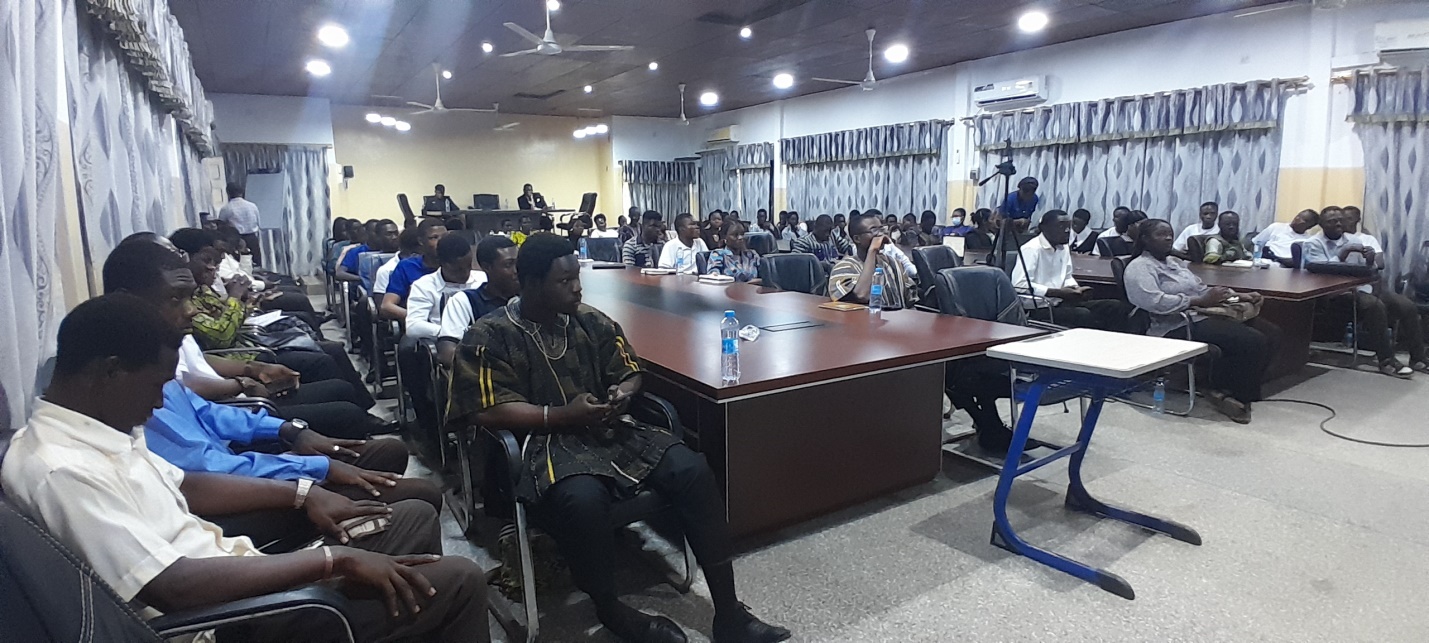
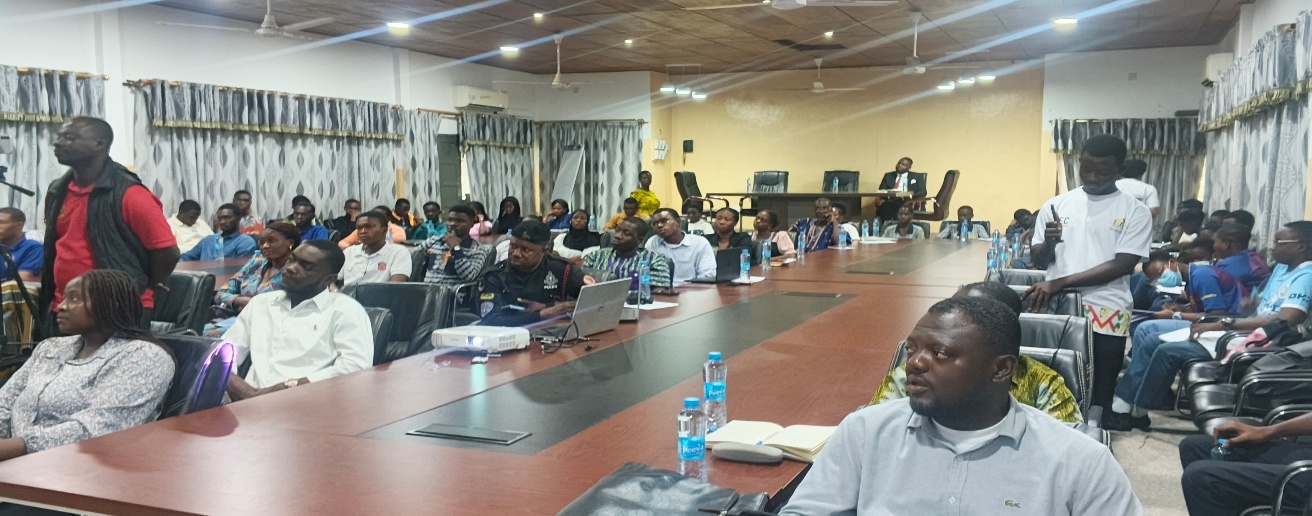
Over 70 students at the University of Cape Coast (UCC) participated in a day-long symposium on “The Rule of Law and the Fight Against Corruption” held at the Sasakawa Conference Hall on May 21, 2026.
The program was organized by the Central Regional Office of the National Commission for Civic Education (NCCE) with support from GIZ, the European Union (EU), German Cooperation, the Ministry of Finance, and other development partners.
The symposium brought together legal practitioners, law enforcement officers, anti-corruption experts, and academics to educate students on issues of conflict of interest, influence peddling, and abuse of office in public institutions.
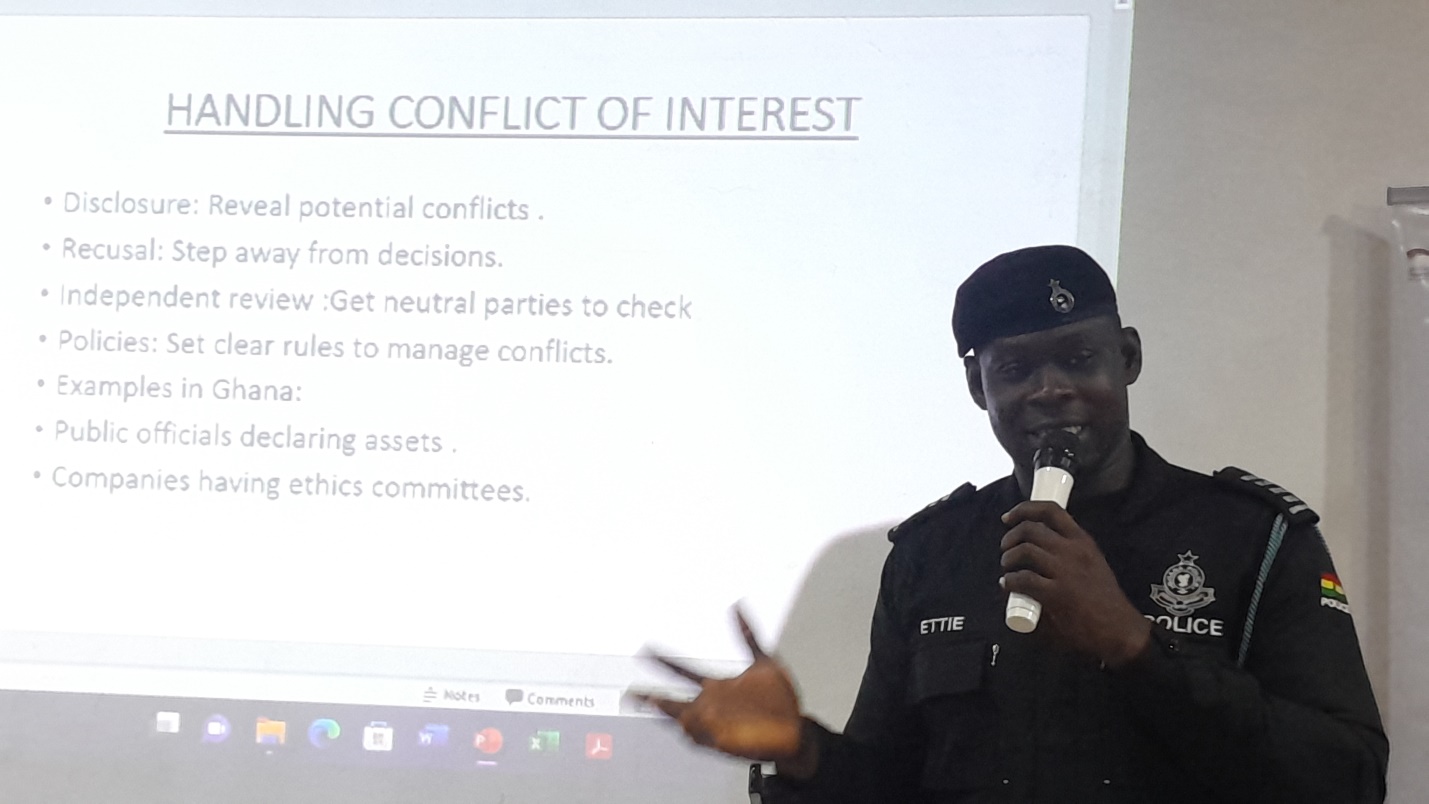
Speaking at the event, Chief Inspector Isaac Evans Ettie of the Ghana Police Service explained that conflict of interest occurs when an individual’s personal interests or relationships interfere with the impartial performance of official duties. According to him, such situations undermine public trust, compromise objective decision-making, and expose institutions to ethical and legal challenges.
He highlighted constitutional safeguards, including Article 284 of the 1992 Constitution, which prohibits public officers from placing themselves in positions where personal interests conflict with official responsibilities, and Article 286, which requires public officials to declare their assets and liabilities.
Chief Inspector Ettie urged participants to promote transparency through disclosure, recusal from compromised decisions, independent reviews, and strict adherence to institutional policies.
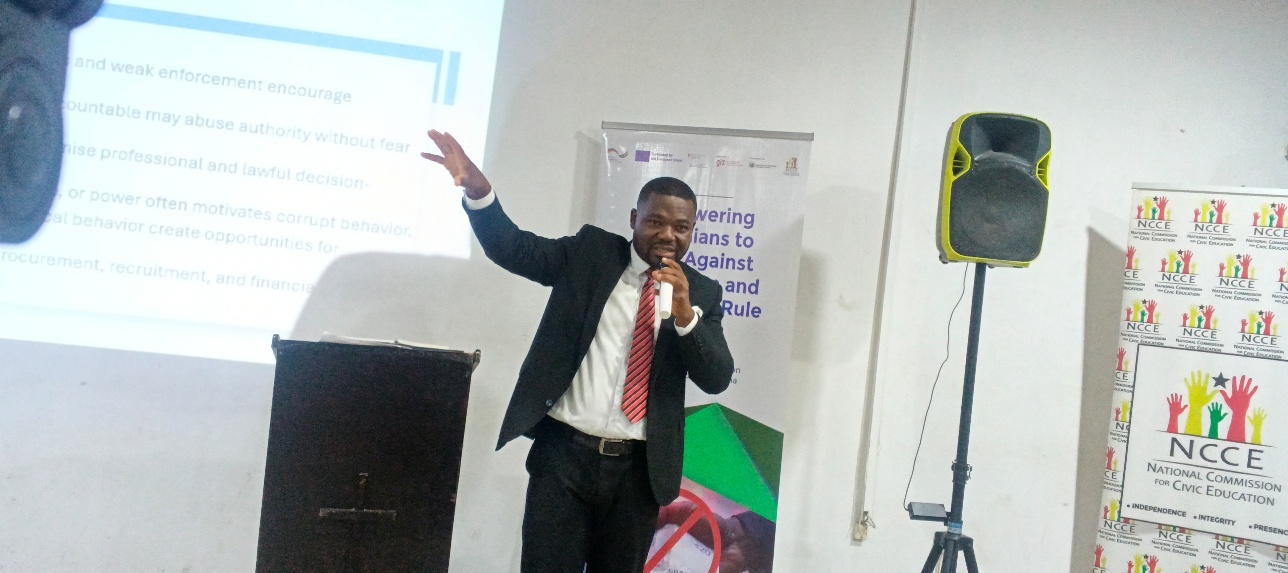
Mr. Kweku Mensah Simpson, Legal Officer at the Commission on Human Rights and Administrative Justice (CHRAJ), described influence peddling as the unethical or illegal use of personal connections to secure favors, contracts, appointments, or other benefits in exchange for money, gifts, or influence.
He noted that the practice commonly occurs in public procurement, recruitment, promotions, licensing processes, judicial proceedings, and political dealings.
Mr. Simpson further explained that abuse of office involves the improper use of public authority and resources for personal gain or to unfairly benefit others. He cited nepotism, favoritism, misuse of public funds, procurement manipulation, and intimidation as common examples.
The speakers identified weak institutional controls, inadequate accountability systems, political interference, greed, poor ethical culture, and lack of transparency as major causes of corruption.
To address these challenges, they recommended strengthening anti-corruption laws, promoting transparency and accountability, protecting whistleblowers, intensifying ethics education, digitalizing public services, and enforcing robust internal control systems.
They also emphasized integrity, accountability, transparency, impartiality, professionalism, and commitment to the public interest as essential public service values.
Students were encouraged to demand transparency and support ethical leadership. The symposium further highlighted the roles of key anti-corruption institutions, including CHRAJ, the Office of the Special Prosecutor (OSP), the Economic and Organized Crime Office (EOCO), the Auditor-General’s Department, and the Public Procurement Authority (PPA).
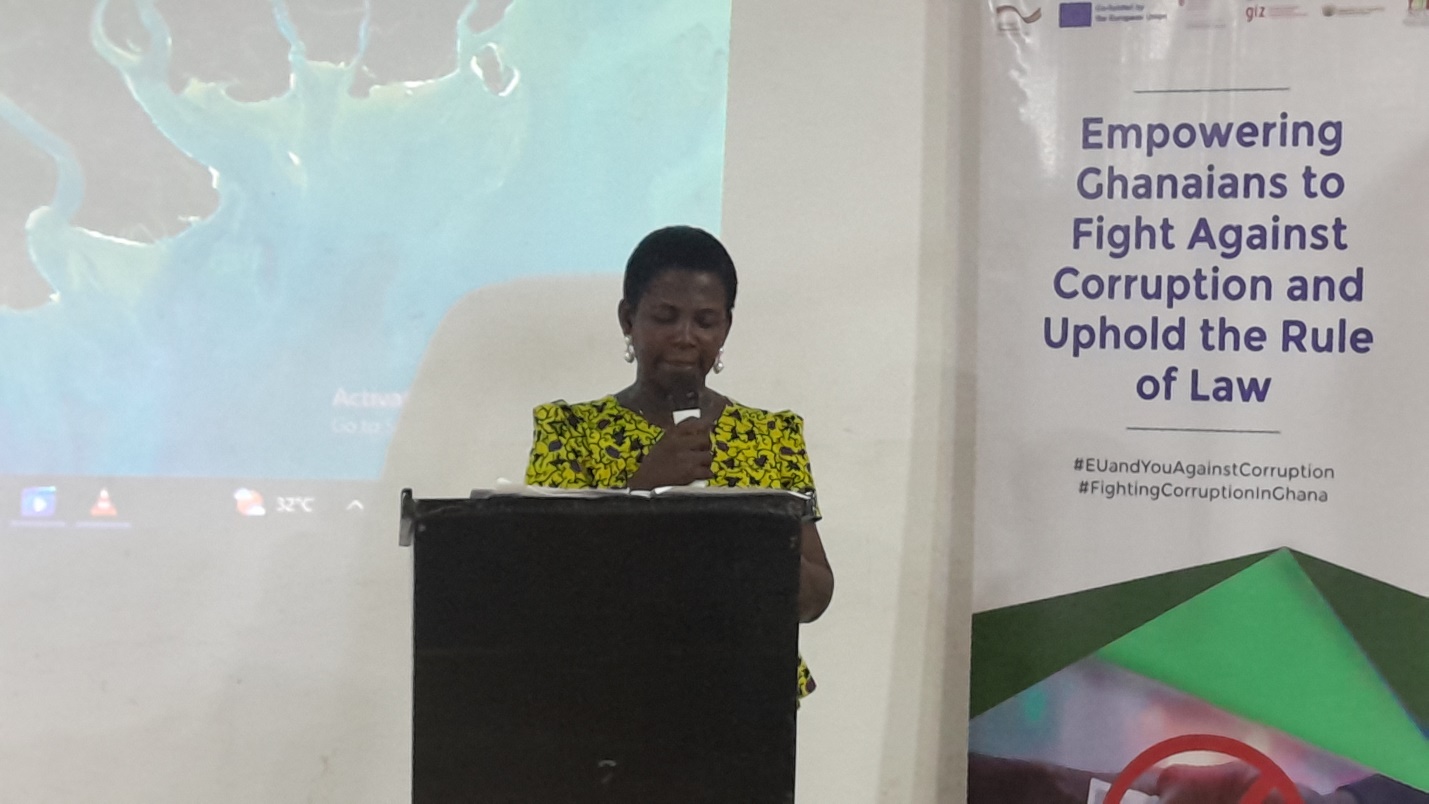
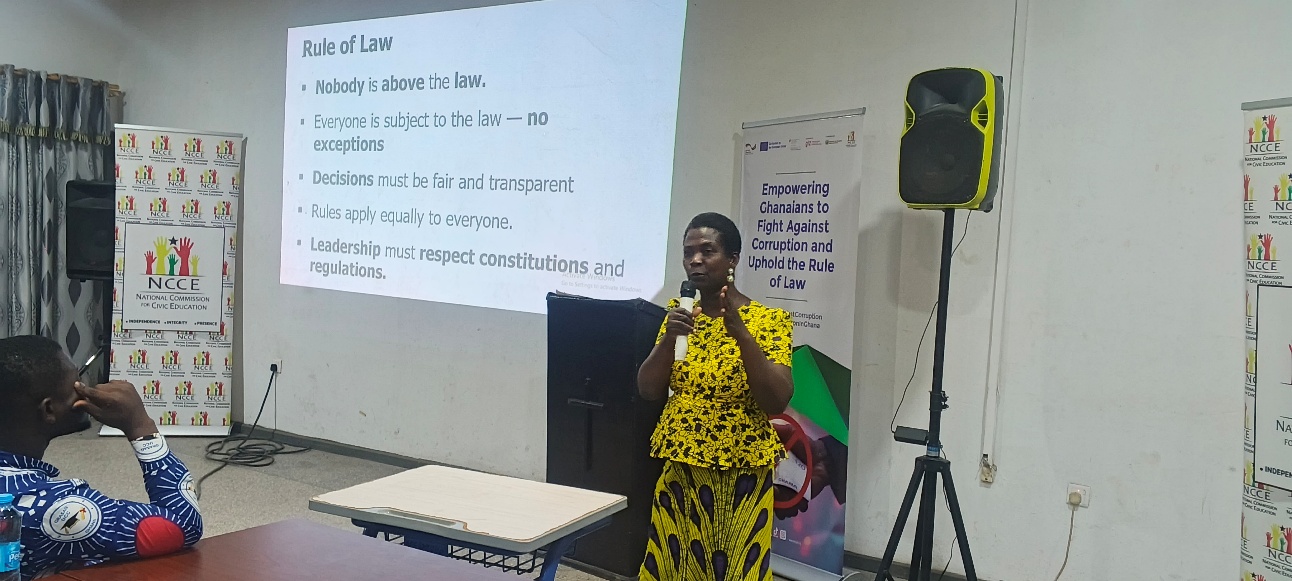
In her closing remarks, the Central Regional Director of NCCE, Madam Mercy Essien, urged students to place service above personal ambition and uphold integrity, fairness, accountability, discipline, and patriotism.
She advised aspiring student leaders to remain accountable, courageous in speaking against wrongdoing, and committed to protecting Ghana’s future.
Madam Essien stressed that leadership should be based on competence, character, vision, humility, and integrity rather than friendship, ethnicity, familiarity, or inducement.
She concluded by encouraging the University of Cape Coast to continue producing not only graduates with certificates but also citizens of character and leaders who will strengthen democracy, uphold the rule of law, and promote national development.
_
Follow us on our social media pages for more stories and posts from the NCCE.

https://www.instagram.com/nccegh/

https://www.facebook.com/nccegh/
Leave a comment