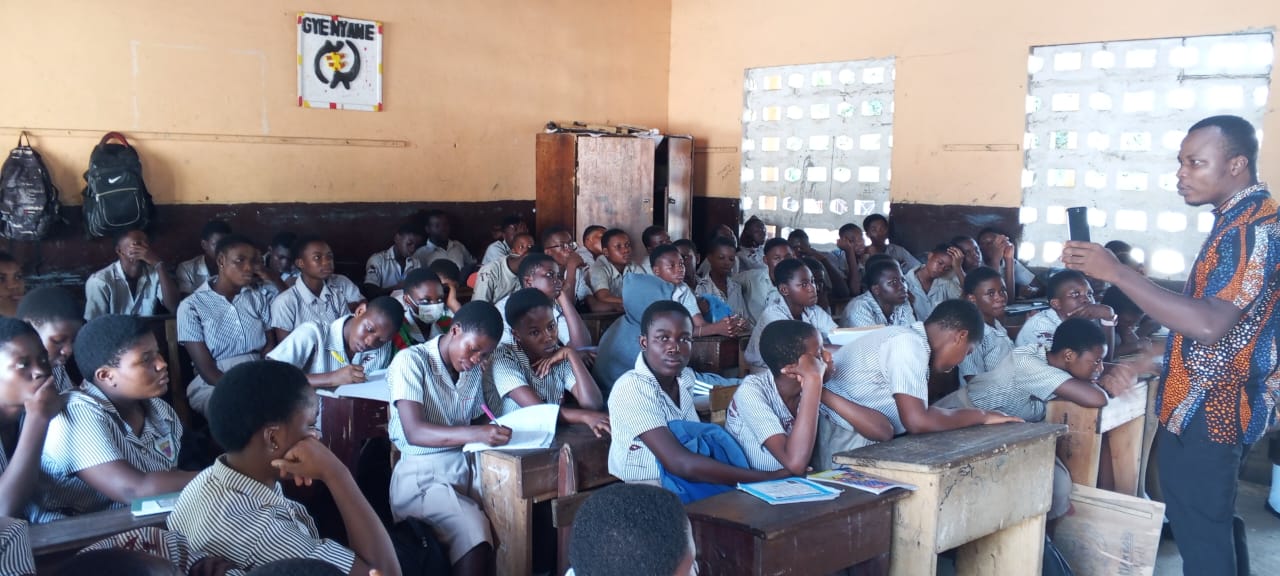
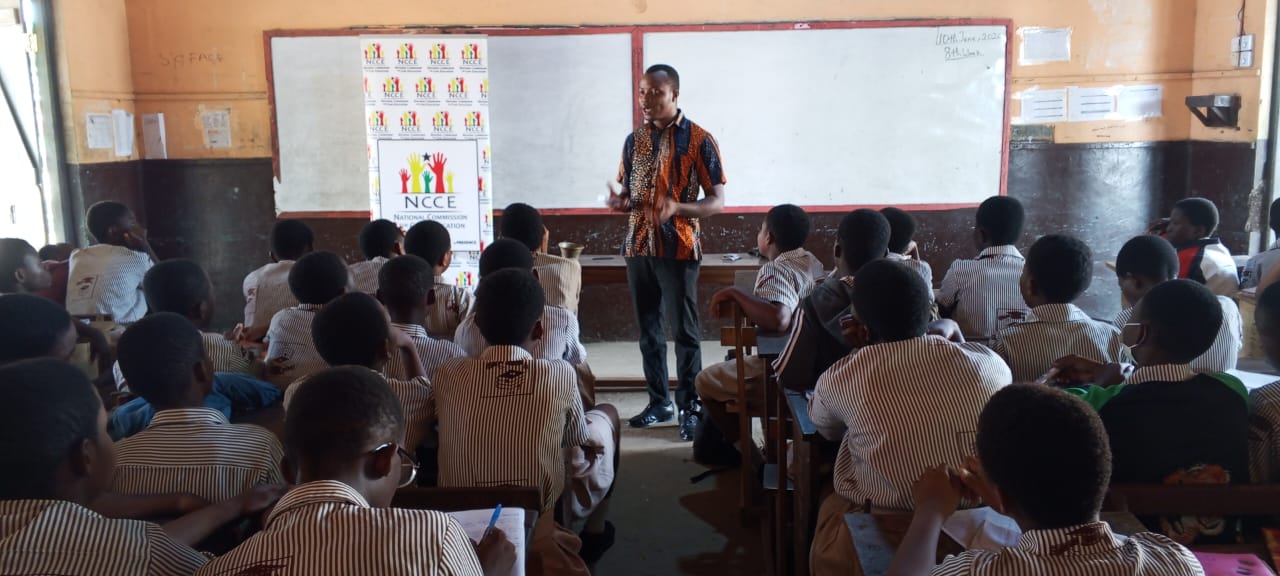
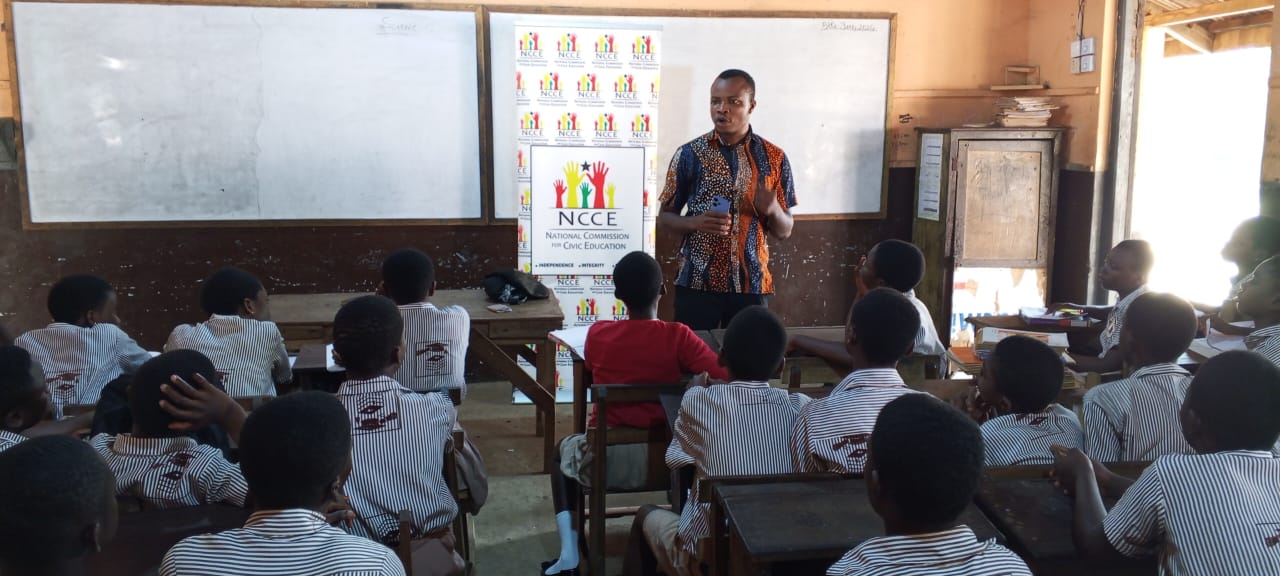
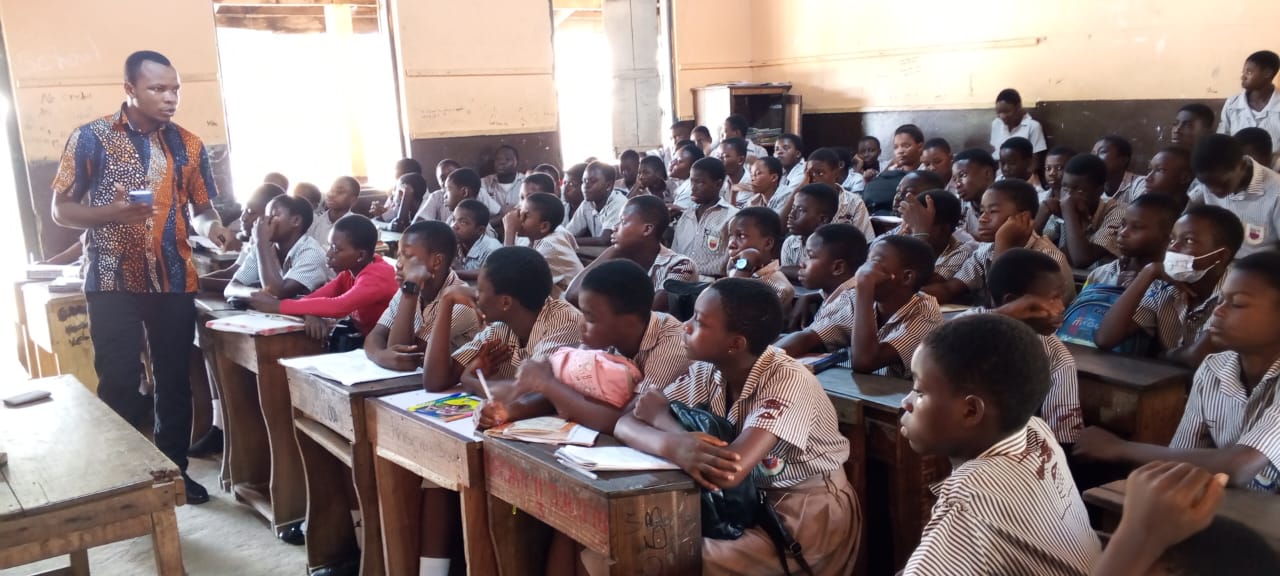
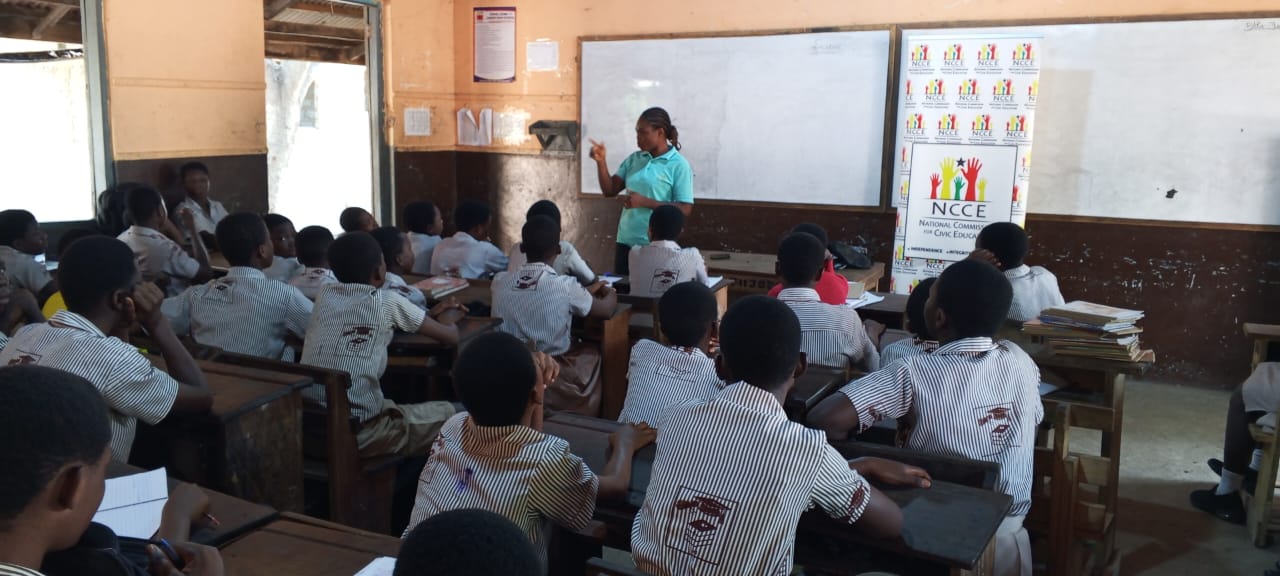
In response to the growing challenges associated with the use of digital technologies among young people, the Ledzokuku District Directorate of the National Commission for Civic Education (NCCE) organized a sensitization programme on cyberbullying and online child protection for students of Teshie LEKMA 11 Junior High School.
The educational engagement was held on Wednesday, 10th June 2026, at Teshie Gonnor and formed part of the Commission's efforts to equip students with the knowledge and skills needed to navigate the digital space safely, responsibly, and confidently.
Opening the programme, Madam Gifty Amedzro, Senior Civic Education Officer, introduced students to the National Commission for Civic Education and its mandate. She explained that the NCCE was established to educate citizens on their rights and responsibilities and to promote civic awareness among all segments of society, especially young people. She noted that educational engagements such as this are essential in preparing students to become responsible citizens in an increasingly digital world.
The main presentation was delivered by Mr. Joshua Akinwale, Civic Education Officer, who educated the students on the opportunities and risks associated with the use of mobile devices and internet platforms. He stressed the need for learners to develop responsible online habits and remain vigilant against activities that could threaten their safety and well-being.
Addressing the issue of cyberbullying, Mr. Akinwale explained that cyberbullying involves the use of digital platforms to harass, intimidate, threaten, embarrass, or deliberately harm others. He outlined some common forms of cyberbullying, including offensive messages, online harassment, spreading false information, and sharing embarrassing content about others without their consent.
He cautioned students against engaging in such behaviour, emphasizing that cyberbullying can have serious emotional, psychological, social, and legal consequences. Students were encouraged to report incidents of cyberbullying to teachers, parents, guardians, or other trusted adults whenever they occur.
Transitioning to the ethical use of mobile devices, Mr. Akinwale advised students to see technology as a tool for learning, research, communication, and personal development. He warned against the excessive use of mobile phones, particularly during instructional hours and study periods, noting that misuse of digital devices can negatively affect academic performance and personal growth.
The students were further educated on online child protection and the various risks children face in the digital environment. Mr. Akinwale highlighted dangers such as online predators, identity theft, cyber scams, and exposure to inappropriate content. He advised students to protect their personal information at all times, avoid sharing sensitive details online, and refrain from communicating with strangers on digital platforms.
He also encouraged learners to immediately report suspicious online activities or uncomfortable interactions to trusted adults and relevant authorities for assistance.
Speaking on digital responsibility, Mr. Akinwale reminded students that every action taken online leaves a digital footprint that can have long-term consequences. He noted that irresponsible online conduct can damage reputations, affect future educational and career opportunities, and cause lasting harm to others.
Students were therefore urged to demonstrate integrity, kindness, respect, and responsibility in all their online interactions. They were encouraged to think carefully before posting, sharing, or commenting on content and to ensure that their online behaviour reflects the values of good citizenship.
The interactive session provided students with the opportunity to ask questions and share their experiences regarding internet use and online safety. The programme successfully enhanced participants' awareness of cyberbullying, online child protection, and responsible digital citizenship, equipping them with practical knowledge to navigate the digital space safely and responsibly.
_
Follow us on our social media pages for more stories and posts from the NCCE.

https://www.instagram.com/nccegh/

https://www.facebook.com/nccegh/
Leave a comment