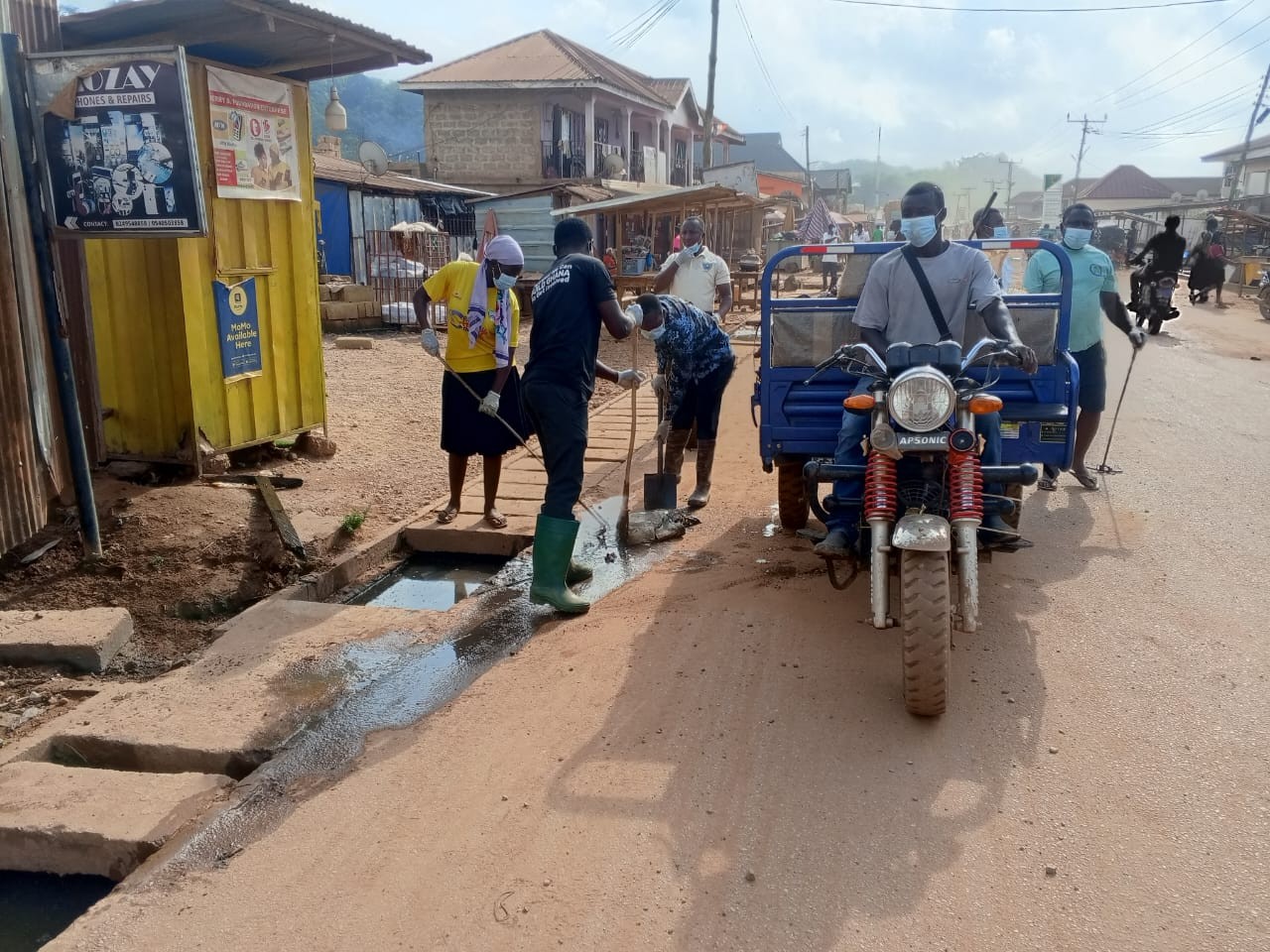
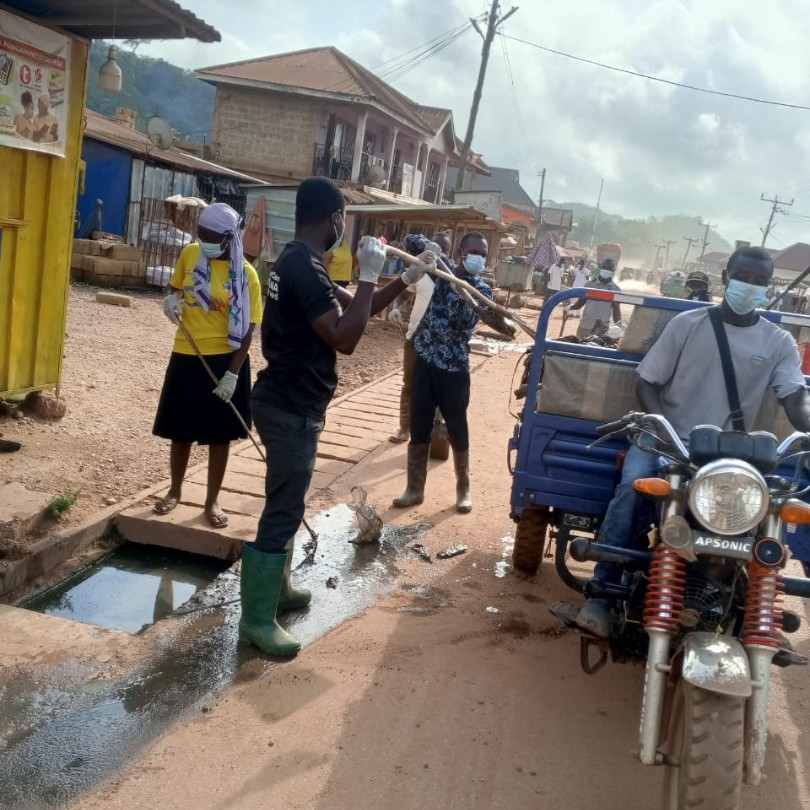
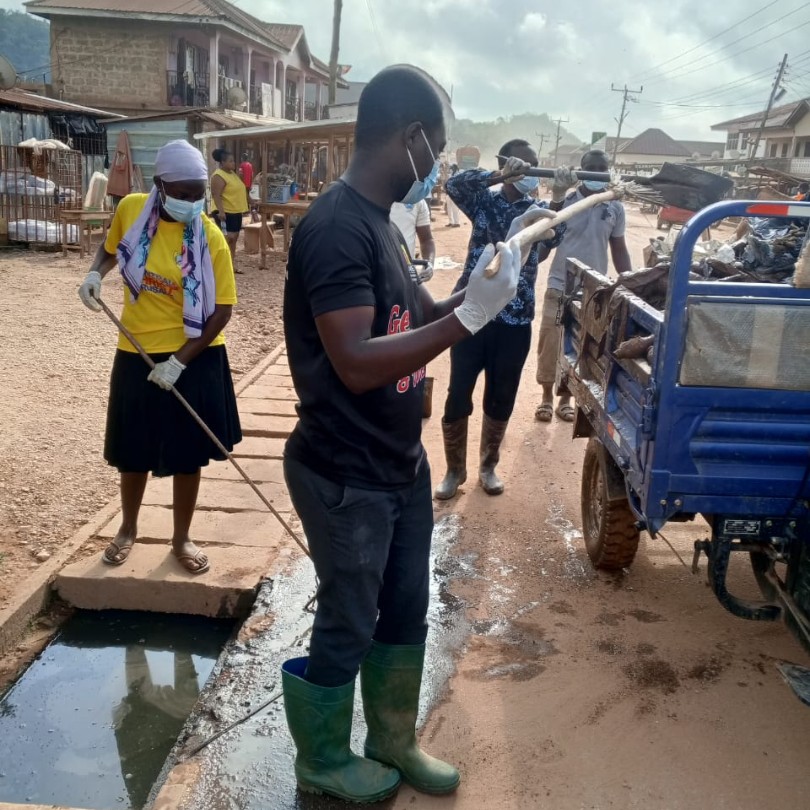
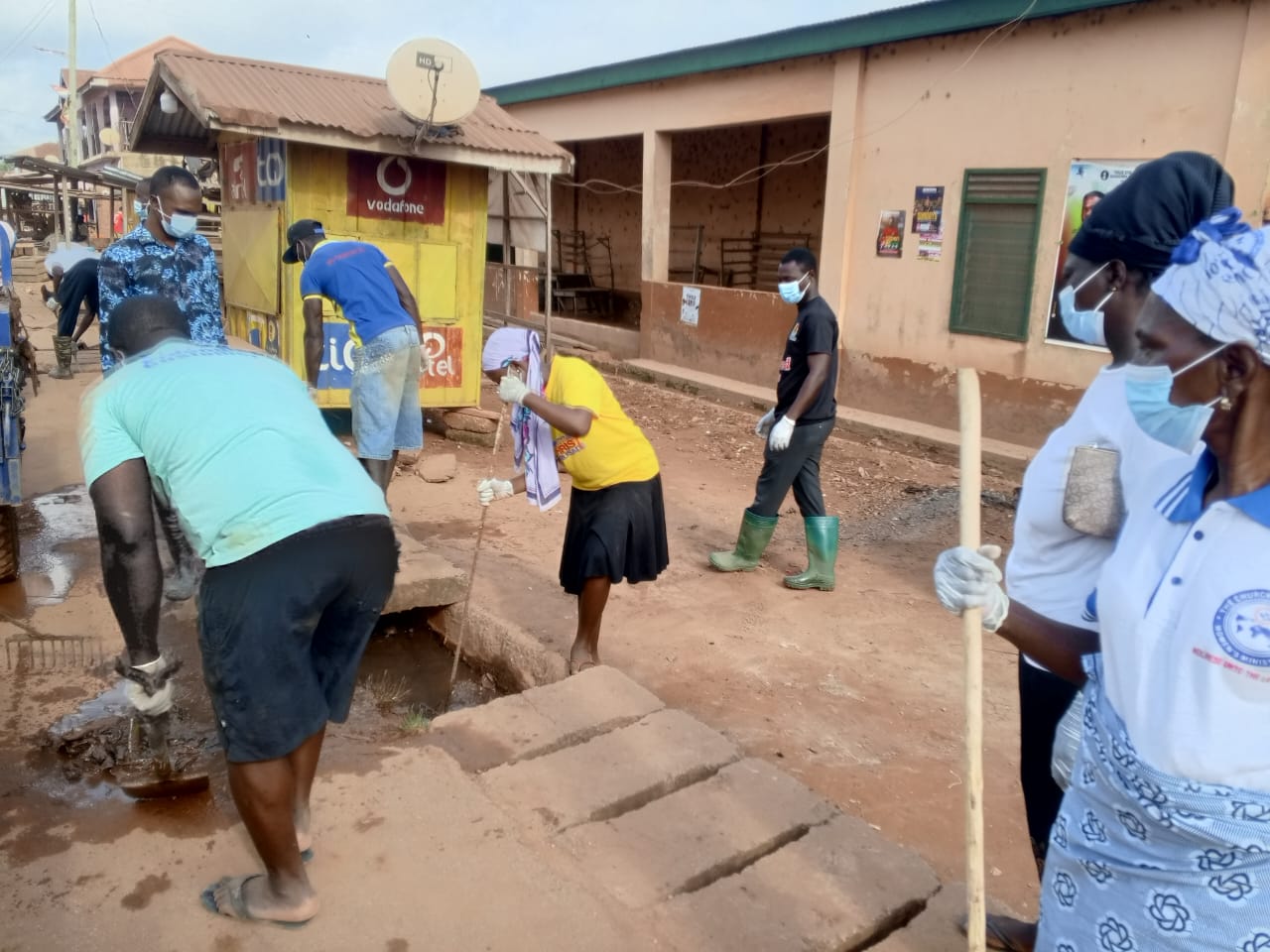
Rainwater should flow freely through drains, not carry plastics, food packs, and sachet waste into communities. This was the message from the Amenfi Central District Office of the National Commission for Civic Education (NCCE) during a clean-up exercise held at the district capital to promote proper waste disposal and environmental responsibility.
NCCE Amenfi Central officers joined community members in the exercise and used the opportunity to educate residents on the dangers of indiscriminate waste disposal. Under the campaign message, “Bin It, Don’t Drain It: Our Waste, Our Problem,” citizens were reminded that careless dumping of refuse into gutters and open drains contributes to flooding, disease outbreaks and environmental degradation.
According to the officers, many people wrongly assume that rainwater will wash waste away when it is thrown into drains. In reality, plastics, sachet water bags and food packs often remain in the gutters, harden over time and block the free flow of water. When heavy rains fall, the water has nowhere to pass and eventually floods homes, shops, schools, and streets.
Beyond flooding, poor waste disposal was described as a major public health concern. Choked drains create breeding grounds for mosquitoes, flies and other disease-carrying insects, increasing the risk of malaria, cholera, diarrhoea and other preventable diseases.
Children, the elderly, and other vulnerable persons are often the worst affected when communities fail to maintain clean surroundings. Resources used to desilt drains and respond to sanitation-related emergencies could also be invested in classrooms, clinics, and other community development projects.
Residents were therefore encouraged to use refuse bins at home, in schools, at workplaces, and in markets. Where bins are not immediately available, citizens were advised to keep their waste until they find an appropriate place to dispose of it.
As part of the message, community members were also urged to reduce plastic waste by using reusable bottles, shopping bags, and containers. Citizens were further encouraged to politely correct people who litter, since clean habits can spread when people speak up responsibly.
Environmental protection, the NCCE emphasized, is a shared civic duty. Households, traders, transport operators, students, and community leaders were called upon to support clean-up exercises and adopt responsible waste disposal practices.
Clean drains, safe communities, and healthy lives begin with one simple decision: bin waste, do not dump it into drains.
_
Follow us on our social media pages for more stories and posts from the NCCE.

https://www.instagram.com/nccegh/

https://www.facebook.com/nccegh/
Leave a comment