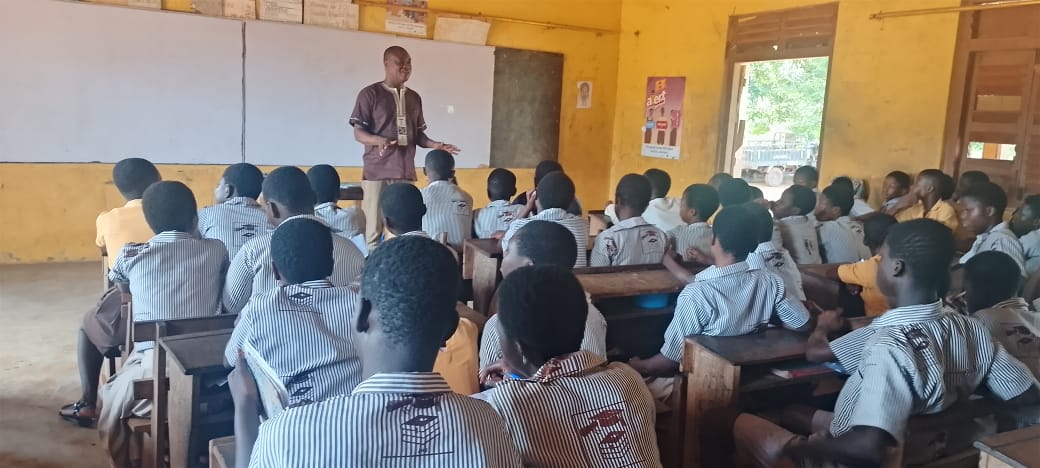
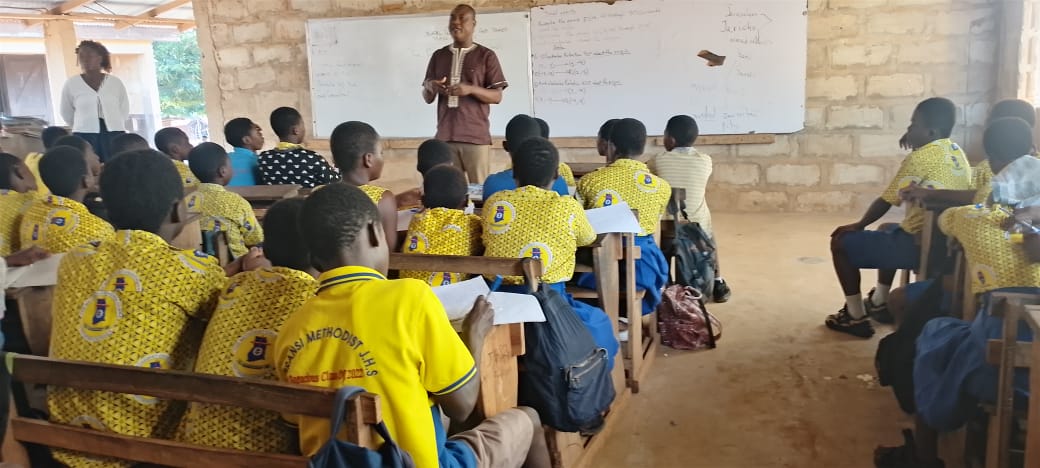
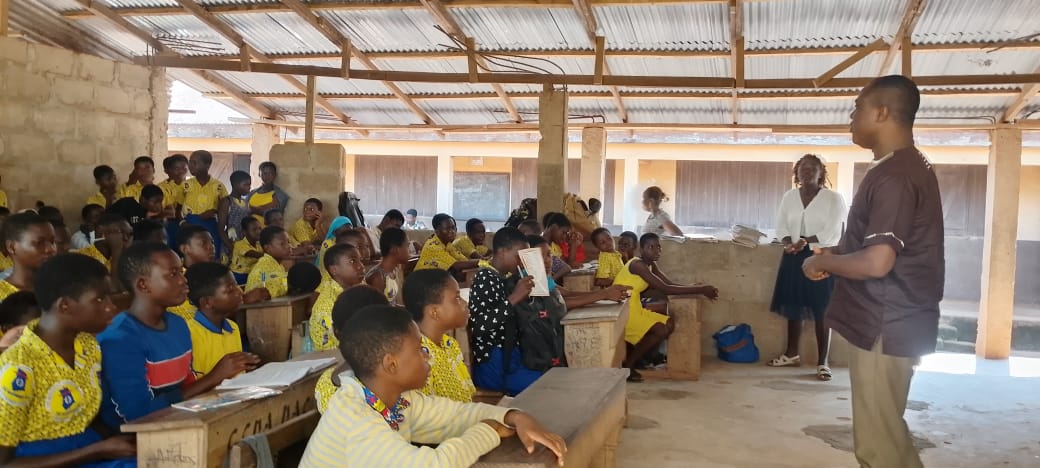
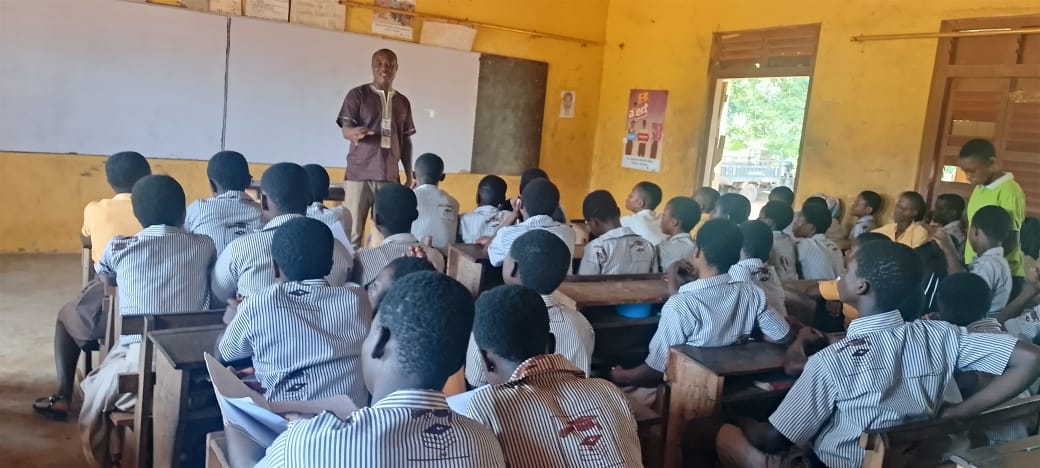
As part of activities marking the 2026 Citizenship Week Celebration, the Gomoa Central District Directorate of the National Commission for Civic Education (NCCE) on Wednesday, June 10, 2026, engaged pupils of Obuase D/A Junior High School and Afransi Methodist Junior High School on responsible digital citizenship and the importance of upholding constitutional values online.
The educational outreach was held under the theme, “Upholding Our Constitution in the Digital Age: Our Collective Responsibility,” with a focus on the sub-theme, “Growing Up Digital: The Ghanaian Child Upholding the Constitution Online.” The programme sought to equip pupils with the knowledge and skills required to navigate the digital space responsibly while respecting the rights and freedoms of others.
Addressing the learners, Mr. Charles Mensah Ahorlete, Principal Civic Education Officer at the Gomoa Central Directorate, explained that the 1992 Constitution remains the supreme law of Ghana and serves as a guide for citizens' conduct and interactions, both in the physical and digital environments.
He noted that while the Constitution guarantees citizens the right to freedom of expression, that right must be exercised responsibly. According to him, the digital space should not be used to insult others, spread false information, or engage in activities that undermine the rights and dignity of fellow citizens.
Mr. Mensah Ahorlete encouraged the pupils to develop the habit of critically evaluating information before sharing it online. He advised them to always ask whether the information they intend to post is truthful, respectful, and beneficial to others. He emphasized that responsible communication is essential for promoting peace, tolerance, and national cohesion.
The learners were further urged to think carefully before posting, commenting, or forwarding content on social media and other online platforms. He stressed the importance of verifying information from credible sources and cautioned against the spread of misinformation and unverified rumours, which can cause confusion and harm.
Transitioning to the issue of online safety, Mr. Mensah Ahorlete educated the pupils on the dangers associated with sharing personal information on the internet. He advised them not to disclose sensitive details such as telephone numbers, home addresses, passwords, or inappropriate photographs to strangers or unknown persons online.
He also encouraged learners to remain vigilant and report suspicious online activities, inappropriate requests, or cyber-related threats to parents, teachers, or the appropriate authorities for assistance and protection.
In his concluding remarks, Mr. Mensah Ahorlete addressed the issue of cyberbullying, describing it as a harmful practice that can negatively affect the emotional and psychological well-being of victims. He urged the pupils to reject all forms of cyberbullying and to refrain from participating in, encouraging, or sharing harmful online content.
The pupils were encouraged to support colleagues and friends who may become victims of online abuse and to contribute to creating a safe, respectful, and inclusive digital environment for everyone.
He reminded the learners that actions taken online often have real-life consequences and that their conduct in the digital space can either strengthen social harmony or contribute to conflict and division. He therefore called on them to become responsible digital citizens who uphold the values, principles, and democratic ideals enshrined in the Constitution of Ghana.
The interactive engagement provided pupils with the opportunity to ask questions and share their experiences regarding internet use and online safety. The programme successfully enhanced their understanding of digital citizenship, constitutional responsibilities, and the importance of using technology responsibly for personal growth and national development.
_
Follow us on our social media pages for more stories and posts from the NCCE.

https://www.instagram.com/nccegh/

https://www.facebook.com/nccegh/
Leave a comment