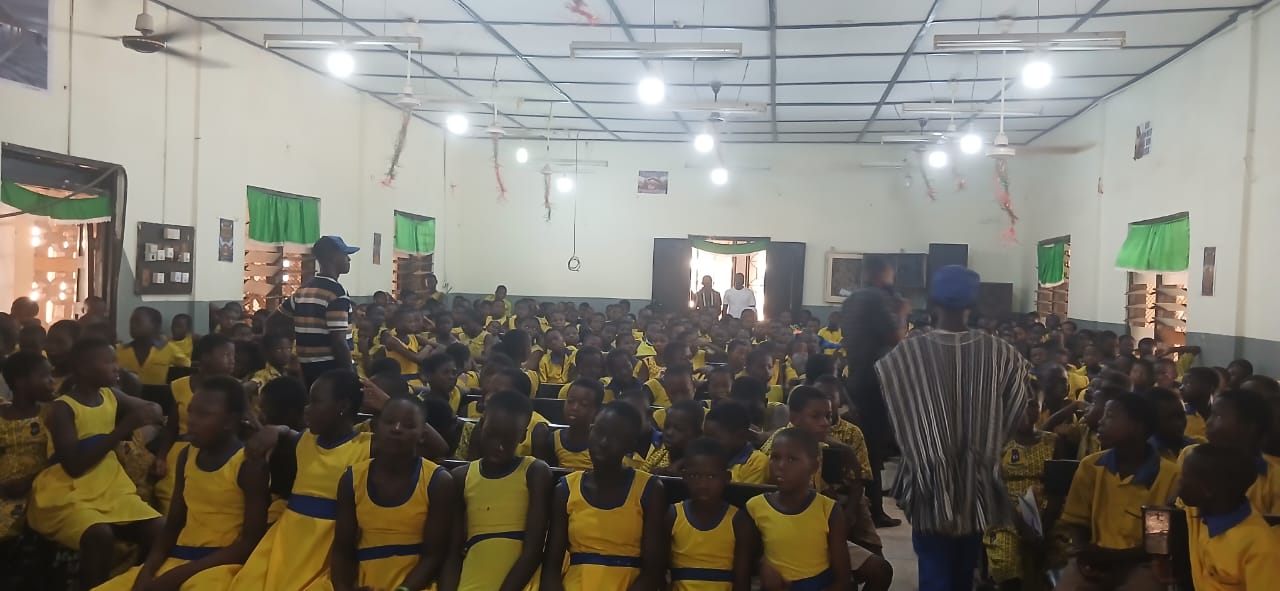
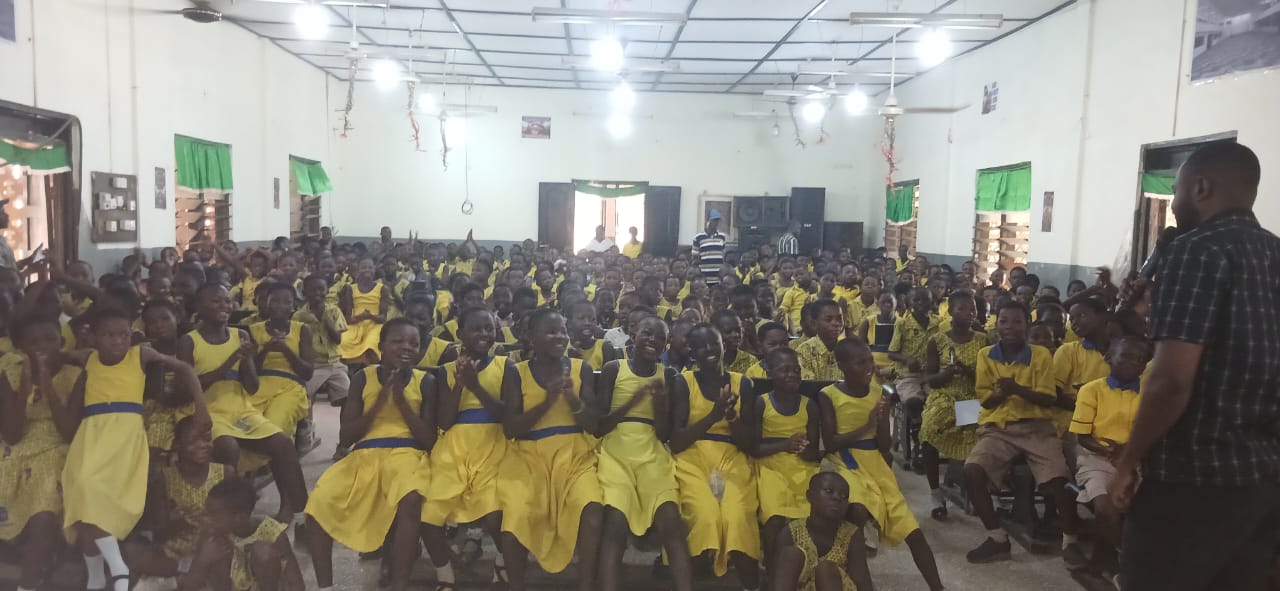
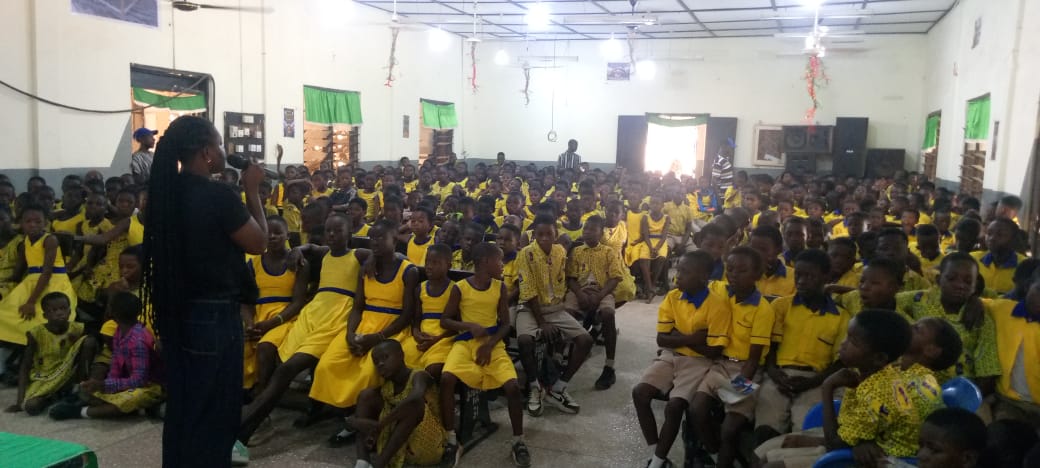
As part of its Fourth Quarter Activities, the National Commission for Civic Education (NCCE) continued its school outreach programme with a visit to Methodist Basic School, Bolgatanga.
The programme focused on two important issues affecting children today: *Sexual Abuse and Exploitation, and Internet Fraud.*
Sexual Abuse and Exploitation
Ms. Evelyn Ameseya, who led the session, took the pupils through what sexual abuse and exploitation mean in simple language they could understand.
She explained that sexual abuse is when someone forces, tricks, or pressures a child into any sexual act without their consent. She stressed that a child can never consent to sex with an adult, and that no one, whether a stranger, a family member, or a friend, has the right to touch a child’s private parts.
Ms. Ameseya also spoke about sexual exploitation, where someone uses gifts, money, threats, or promises to make a child do sexual things. She told the pupils that this is wrong and a crime.
She encouraged the pupils to speak out boldly whenever something of that sort happens to them or to someone they know. She advised them to tell a trusted adult, a teacher, a parent, a nurse, or report to DOVVSU at the Police Station. She reminded them: “It is never your fault. Do not be afraid to speak.”
Internet Fraud
Mr. Eric Tambola then took the pupils through Internet Fraud and the dangers involved.
He explained how fraudsters use the internet to trick people — through fake accounts, fake giveaways, fake job offers, and messages promising quick money. He warned the pupils not to share their passwords, photos, or personal information online, and not to chat with strangers.
He also explained that internet fraud is a crime in Ghana under the Cybersecurity Act, 2020 (Act 1038), and that children who take part in it can face serious trouble, while those who fall victim to it can lose money and their safety.
A teacher at the school, Mr. Daniel Owusu, also advised the pupils to speak up whenever they are faced with such challenges. He told them not to suffer in silence because of fear or shame. He assured them that teachers are ready to listen and help.
The session was interactive. Pupils asked questions, gave examples, and shared what they had learnt. Many said they now know how to protect themselves and how to help a friend in trouble.
The programme ended with a strong message from the facilitators: Speak Out, Stay Safe — Both Online and Offline.
The NCCE team thanked the Headteacher, staff, and pupils of Methodist Basic School for their warm welcome and active participation.
_
Follow us on our social media pages for more stories and posts from the NCCE.

https://www.instagram.com/nccegh/

https://www.facebook.com/nccegh/
https://www.youtube.com/channel/UCwajFJmmlmzRf1OMM.
Leave a comment