The fight against corruption begins long before citizens assume public office. It begins in classrooms, school clubs, and youth spaces where young people are taught to value honesty, fairness, and respect for the law.
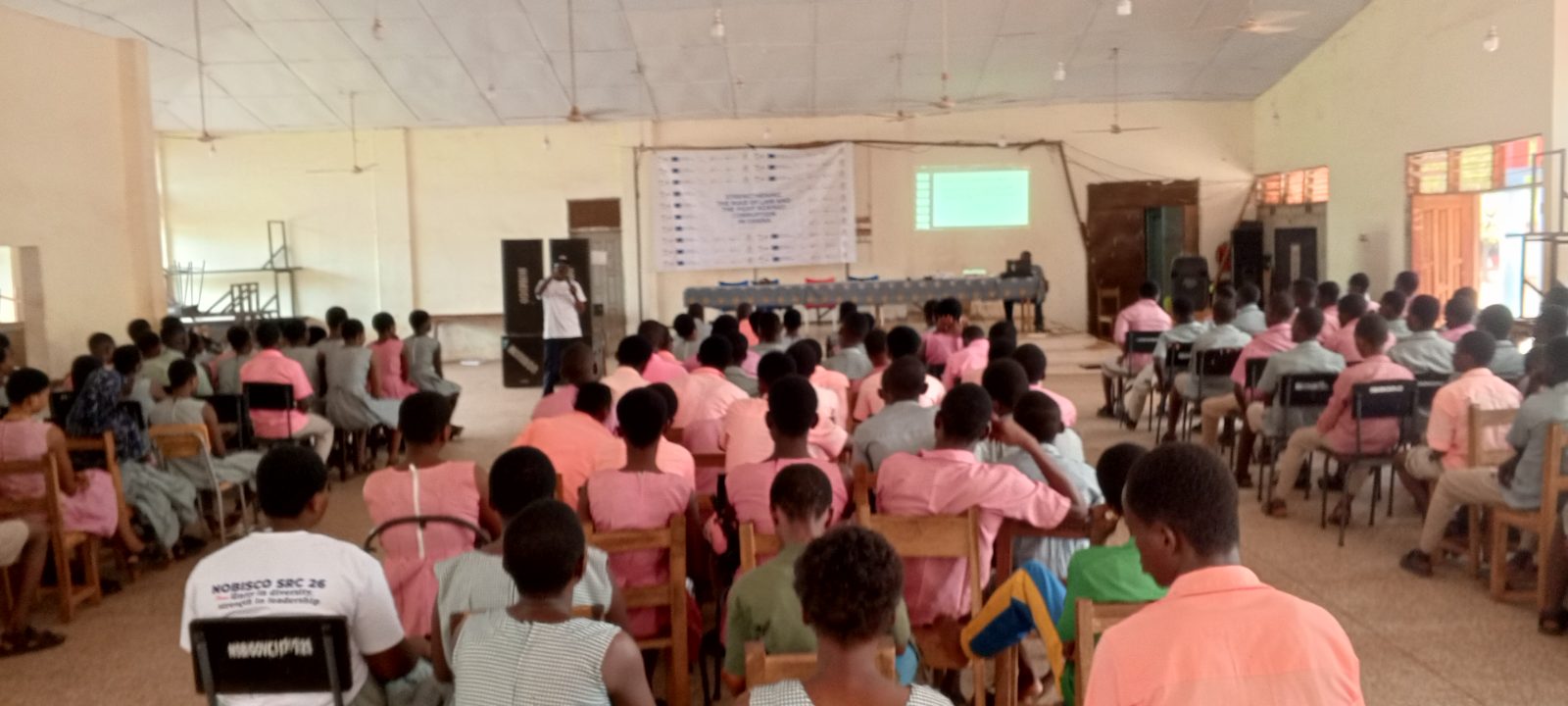
It was against this background that the Sagnarigu Municipal Office of the National Commission for Civic Education (NCCE) engaged members of the Civic Education Club of the Northern School of Business on the rule of law, conflict of interest, ethical leadership, and the need for young people to support the fight against corruption.
The educational engagement was organized to deepen students’ understanding of how corruption affects national development and why citizens must uphold integrity in both private and public life. The programme also sought to encourage students to make fair, transparent and responsible decisions in their schools, homes and future workplaces.
Addressing the students, the Sagnarigu Municipal Director of the NCCE, Mr. Abdulai Soale, urged them to take an active interest in the national anti-corruption campaign. He explained that corruption is not limited to public officials but can begin with small acts of dishonesty, favoritism, abuse of trust, and disregard for rules.
Mr. Soale admonished the students to obey the rule of law at all times and to avoid conduct that promotes influence peddling or unfair advantage. He noted that a society with weak respect for the law, poor ethical leadership, and abuse of office creates opportunities for corruption to thrive.
He further sensitized the students on leadership standards, stressing that leadership must be guided by discipline, accountability, fairness, and service to the public good. He encouraged the students to develop these values early so they can become responsible leaders in the future.
The students were also educated on conflicts of interest and how they can affect decision-making. They were made to understand that a conflict of interest occurs when a person’s private interest, personal relationship or expectation of benefit interferes, or appears to interfere, with the proper performance of official duties.
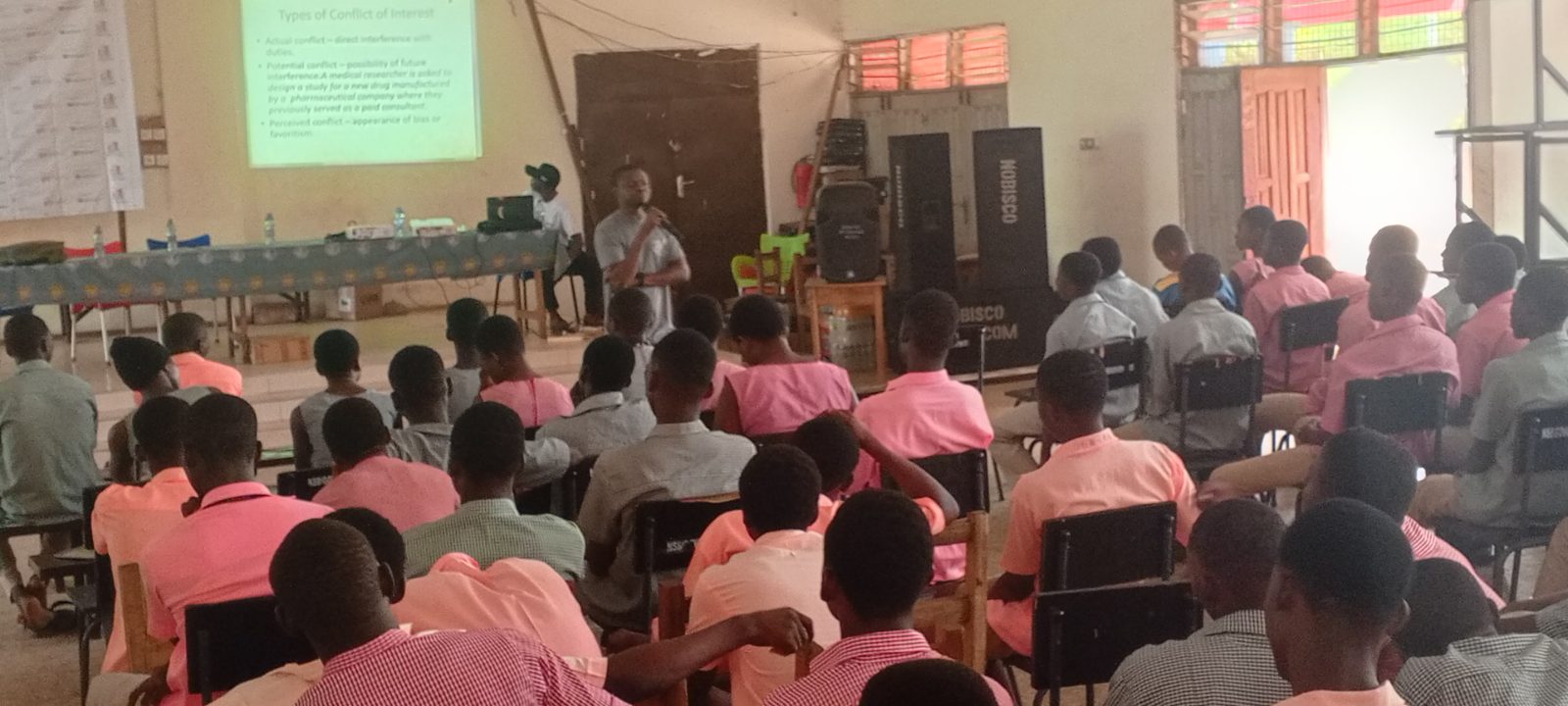
The Sagnarigu Municipal Director of the Commission on Human Rights and Administrative Justice (CHRAJ), Mr. Wahab Abdul-Wasiu, who also addressed the students, explained the various types of conflict of interest. He identified them as actual, potential, and perceived conflicts of interest.
He explained that an actual conflict of interest occurs when a person’s private interest directly affects the performance of official duties. A potential conflict of interest arises when a private interest may influence future decisions. Perceived conflict of interest occurs when others reasonably believe that a person’s decision may be influenced, even if no wrongdoing has occurred.
Mr. Abdul-Wasiu cautioned that conflicts of interest can undermine public trust, weaken institutions, and hinder the successful implementation of government projects. He therefore urged the students to recognize and avoid situations that may compromise fairness, transparency, and accountability.
The session was interactive and gave the students an opportunity to ask questions and share their views on corruption, leadership, and responsible citizenship.
The programme was sponsored by GIZ and the European Union as part of efforts to promote civic awareness, accountability and anti-corruption education among young people.
The NCCE reaffirmed its commitment to nurturing responsible citizens who respect the rule of law, reject corruption and contribute meaningfully to national development.

_
Follow us on our social media pages for more stories and posts from the NCCE.

https://www.instagram.com/nccegh/

https://www.facebook.com/nccegh/
Leave a comment