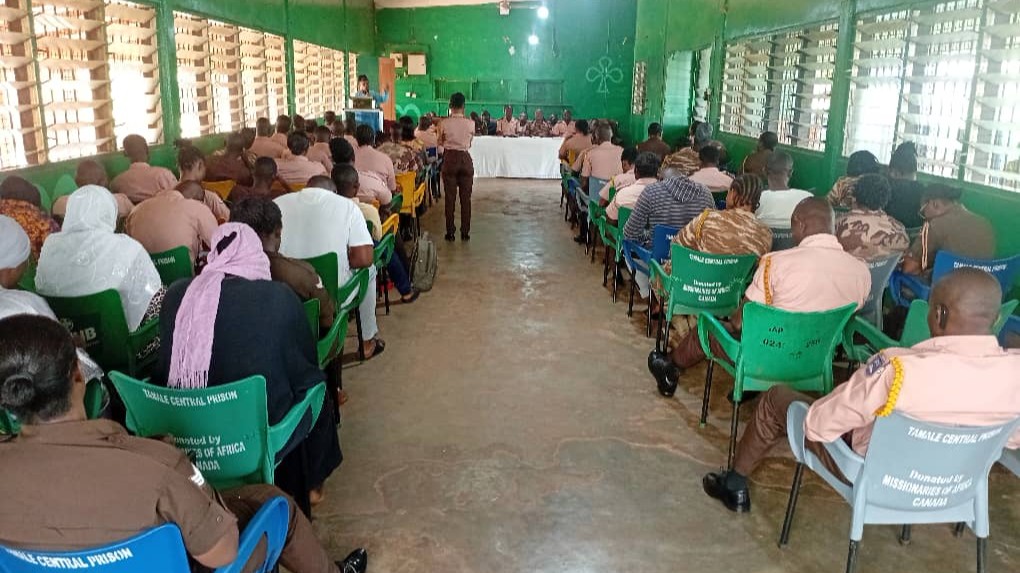
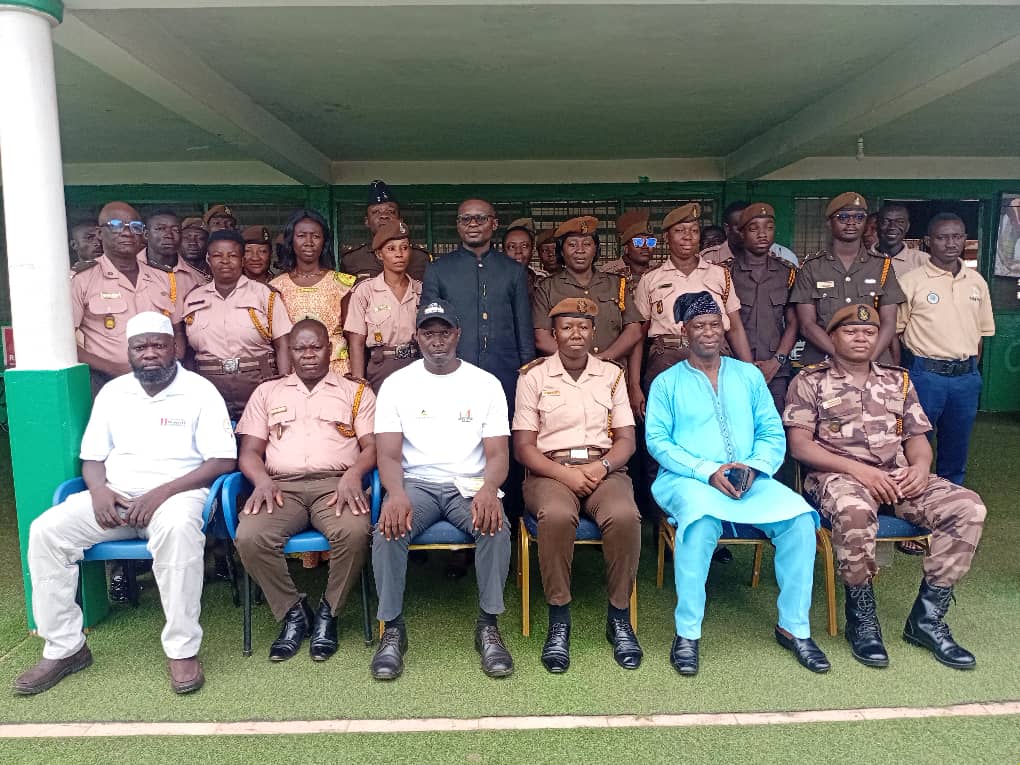
“Democracy is a precondition for sustainable development.” These were the words of the Northern Regional Director of the National Commission for Civic Education (NCCE), Alhaji Aliyu Mohammed, during an engagement with officers of the Ghana Prisons Service in Tamale.
The programme, held at the Prisons Canteen in Tamale, formed part of activities marking the 2026 Constitution Week Celebration. It was organized under the theme: “Upholding Our Constitution in the Digital Age: Our Collective Responsibility.”
Addressing the officers, Alhaji Mohammed explained that Constitution Week is one of the flagship programmes of the NCCE. He noted that the celebration, observed annually from 28th April to 4th May, commemorates Ghana’s return to constitutional democratic rule and promotes civic awareness among citizens.
He recounted that the Constitutions of the First, Second and Third Republics were interrupted by military interventions and could not fully serve their intended purposes. However, he observed that the 1992 Constitution of the Fourth Republic has guided Ghana’s democratic governance for more than three decades.
According to him, this democratic progress must not be taken for granted. He urged citizens, especially officers of the Ghana Prisons Service, to uphold, defend and protect the Constitution as a foundation for peace, stability and national development.
Alhaji Mohammed emphasized that democracy remains one of the surest paths to sustainable development. He noted that many developed countries made progress by strengthening democratic governance, respecting the rule of law and building accountable institutions.
He further cautioned that when countries fail to create development opportunities for their citizens, young people may be forced to take dangerous migration routes in search of better livelihoods abroad. He therefore called for a stronger commitment to democratic values, good governance and national development.
Speaking on the theme, Alhaji Mohammed acknowledged the opportunities created by the digital age but warned that technology must be used responsibly. He stressed that the digital space does not give citizens the freedom to commit crimes or abuse the rights of others without consequences.
He made reference to the Cybersecurity Act, 2020 (Act 1038), as one of the legal frameworks that criminalizes cyber-related offences in Ghana. He advised the officers to avoid misinformation, disinformation, cybercrime, and any irresponsible use of digital platforms.
He further noted that protecting constitutional values in the digital era requires the collective effort of all citizens. He encouraged the officers to serve as examples of discipline, respect for the law, and responsible citizenship both online and offline.
The engagement provided participants with the opportunity to discuss constitutional governance, responsible digital citizenship and the role of security agencies in sustaining Ghana’s democracy.
A total of 66 officers, made up of 54 males and 12 females, participated in the programme.
The session ended with a renewed commitment by participants to uphold the principles and values of the 1992 Constitution and contribute to the promotion of peace, democracy and national development in Ghana.
_
Follow us on our social media pages for more stories and posts from the NCCE.

https://www.instagram.com/nccegh/

https://www.facebook.com/nccegh/
Leave a comment