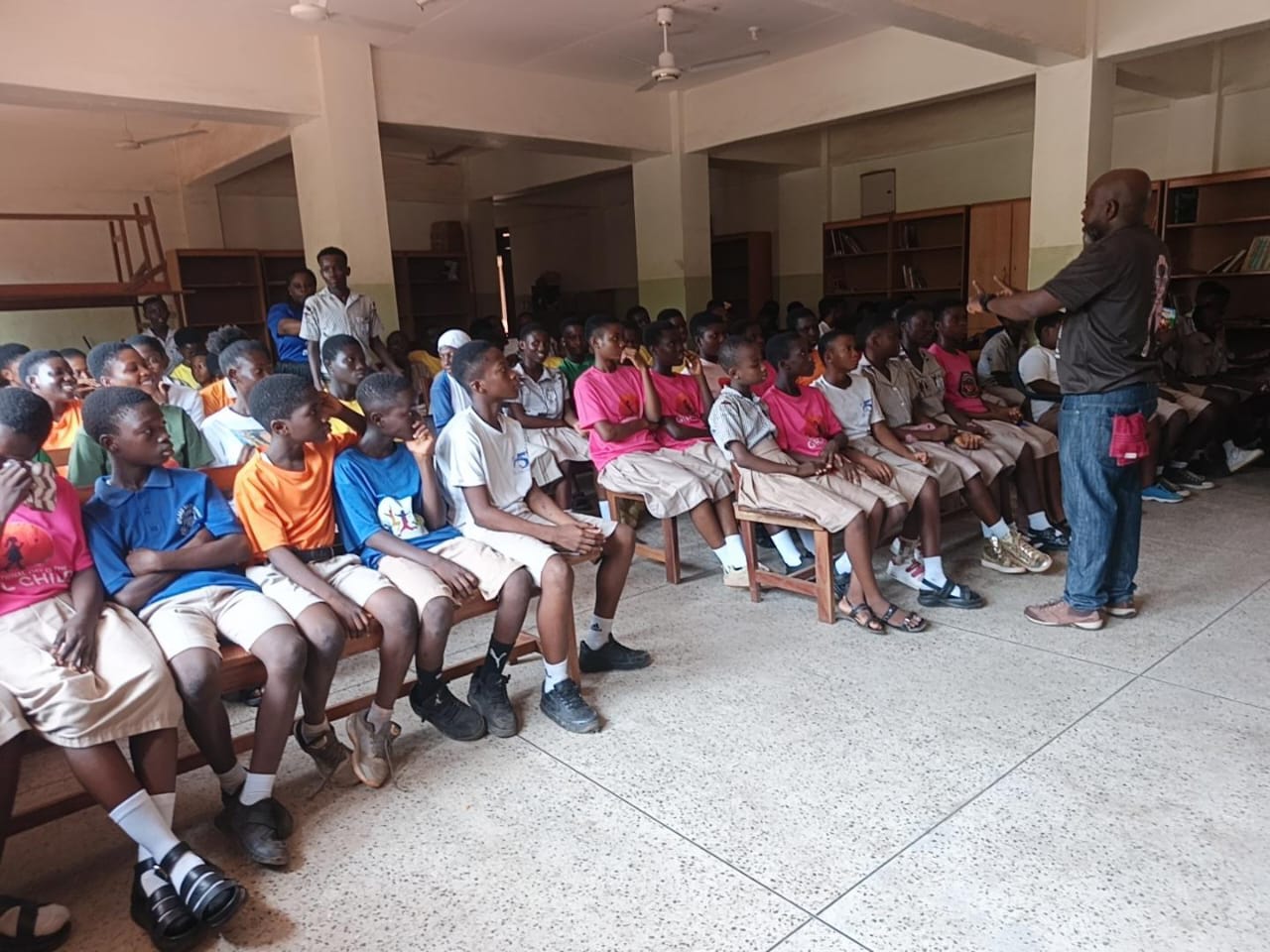
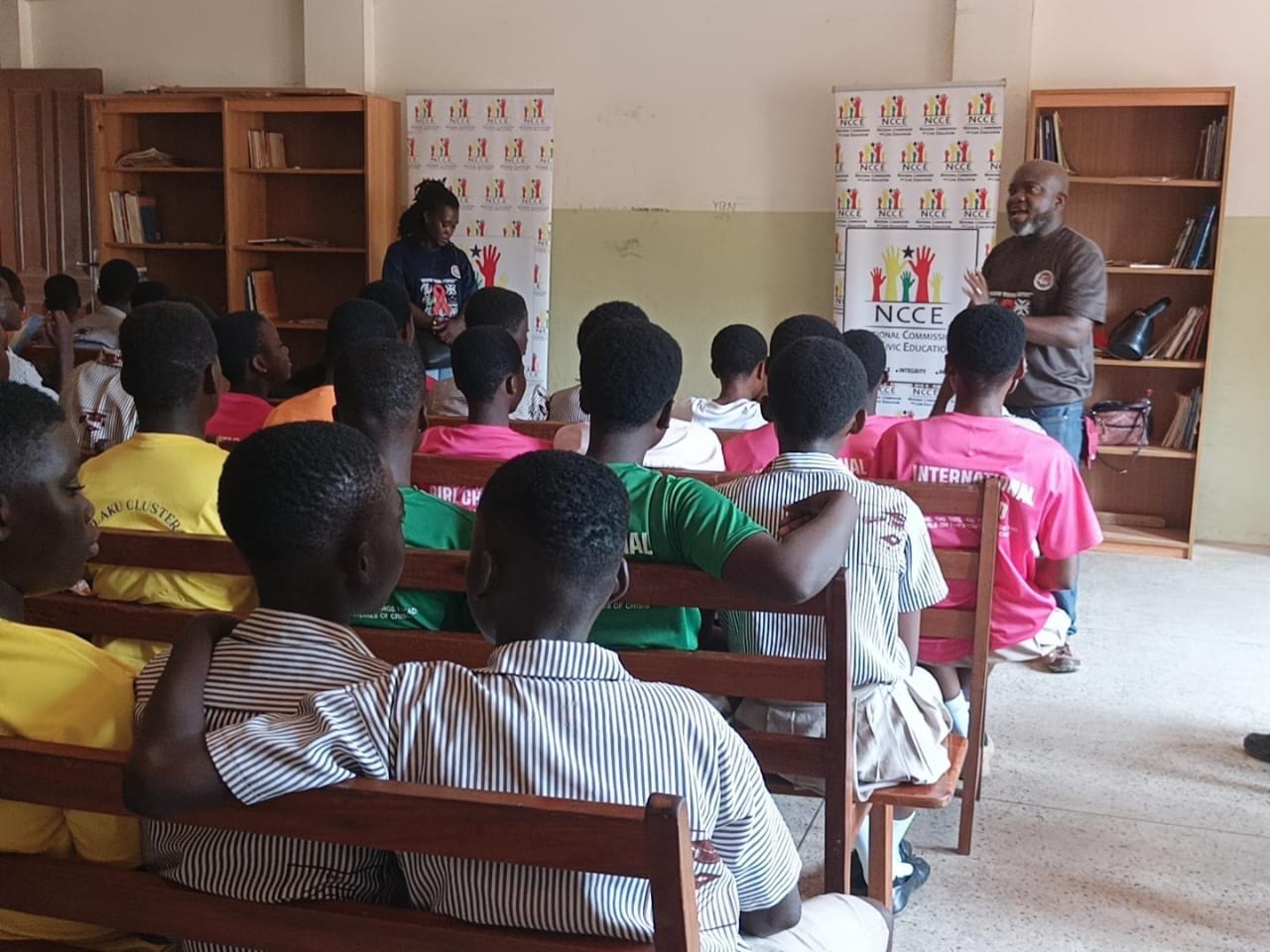
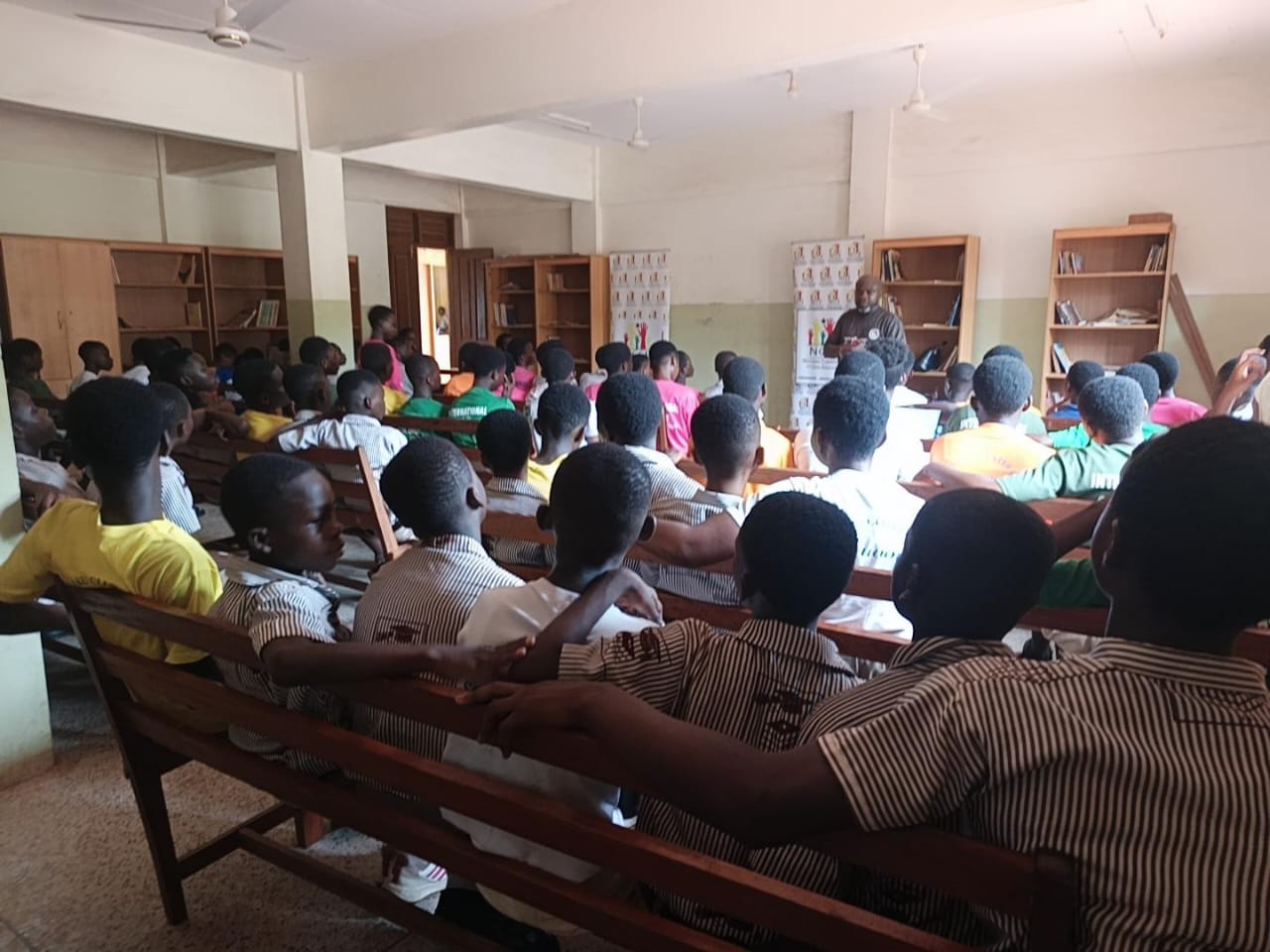
The National Commission for Civic Education (NCCE), in collaboration with the Ga South HIV/AIDS Committee, has organized an educational program for pupils of Aplaku 1, 2, and 3 M/A Basic Schools to increase awareness and understanding of HIV and AIDS prevention.
Speaking during the program, the Municipal Director of NCCE, George Obeng Osei, emphasized the importance of educating young people on HIV prevention and encouraging responsible behavior among pupils. He noted that knowledge and awareness remain key tools in the fight against HIV/AIDS.
The engagement formed part of efforts to promote responsible health practices among young people and equip pupils with accurate information on HIV transmission, prevention, testing, and treatment.
During the sensitization session, pupils were educated on the meaning of HIV and AIDS, modes of transmission, and misconceptions surrounding the virus. Facilitators explained that HIV attacks the body’s immune system and, if left untreated, can lead to AIDS, the advanced stage of the infection. However, they stressed that with modern treatment, many people living with HIV can live long and healthy lives.
The pupils were informed that HIV can be transmitted through unprotected sexual intercourse, sharing contaminated needles, and from mother to child during pregnancy, childbirth, or breastfeeding. They were also educated on activities that do not spread HIV, including hugging, shaking hands, sharing food, mosquito bites, and sneezing.
Facilitators further highlighted the importance of Antiretroviral Therapy (ART), explaining that individuals who consistently take their medication can reduce the virus in their bodies to undetectable levels, making it impossible to sexually transmit HIV to others — a concept known as Undetectable = Untransmutable (U=U).
Pupils were encouraged to know their HIV status through regular testing and adopt preventive measures such as abstinence, proper condom use, and avoiding the sharing of needles or sharp objects.
The programme ended with a call on pupils to become ambassadors of accurate HIV information within their schools and communities to help reduce stigma and contribute to the fight against HIV/AIDS.
_
Follow us on our social media pages for more stories and posts from the NCCE.

https://www.instagram.com/nccegh/

https://www.facebook.com/nccegh/
https://www.youtube.com/channel/UCwajFJmmlmzRf1OMM.
Leave a comment