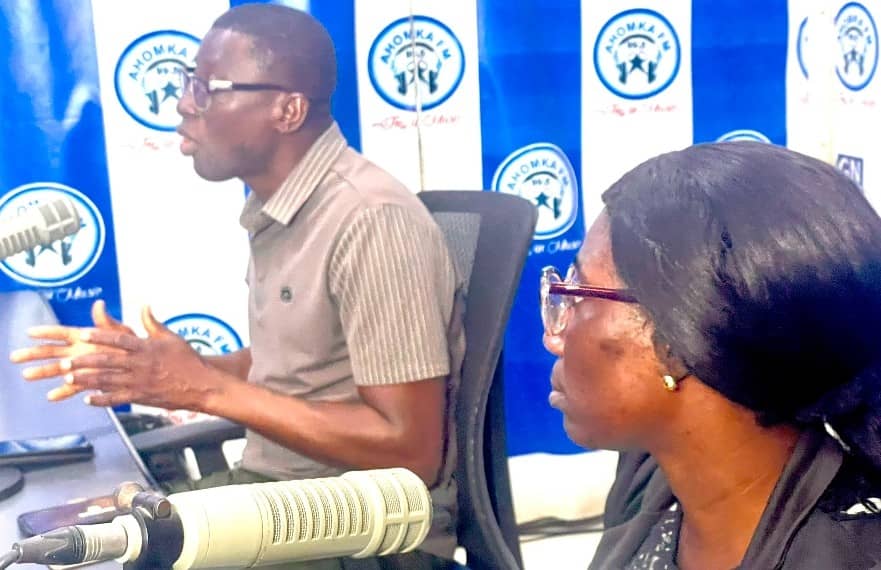
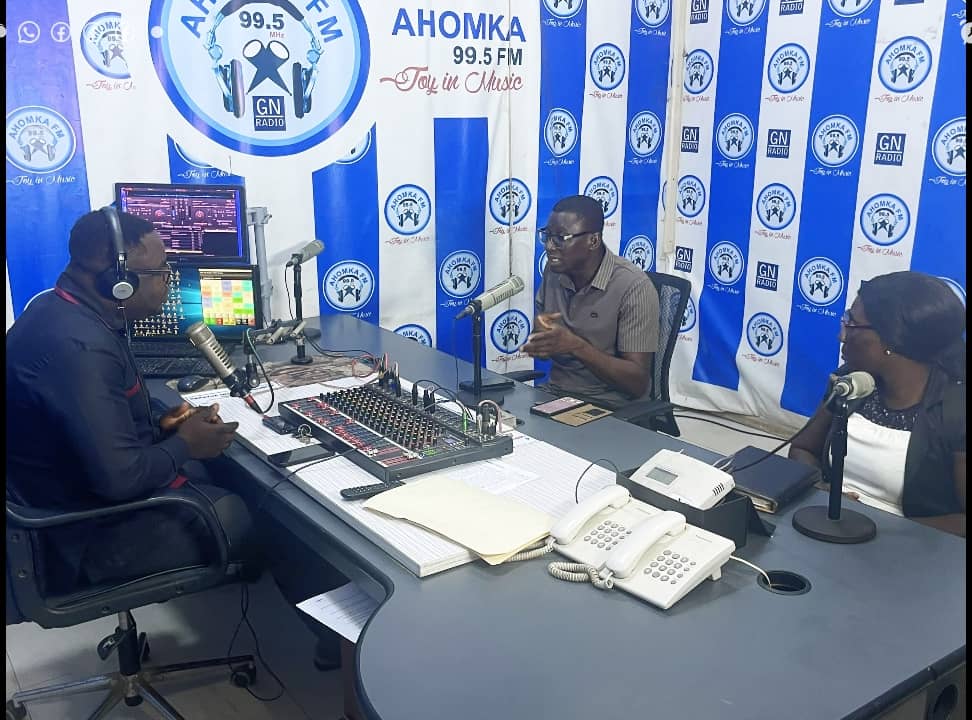
The concern was highlighted during an appearance on Ahomka FM's morning program, Mema Hom Akye. The engagement formed part of the Commission's activities under the 2026 theme, "Upholding Our Constitution in the Digital Age: Our Collective Responsibility," which underscores the need for responsible use of digital platforms in an era where social media, online news outlets and messaging applications significantly influence communication and civic participation.
Speaking on the program, Ms. Philipa Amos, Assistant Civic Education Officer (ACEO), noted that although digital devices such as smartphones, tablets and computers provide children with opportunities for learning, creativity and social interaction, they also expose them to hidden dangers.
She explained that many children in Ghana increasingly rely on digital devices for homework, entertainment and communication, but online predators often exploit this access. According to her, child online abuse includes grooming, cyberbullying, sexual exploitation, sextortion and exposure to harmful content.
Ms. Amos stated that perpetrators frequently disguise themselves as peers on social media platforms, online games, messaging applications and chatrooms to gain children's trust before manipulating and exploiting them. She stressed that technology itself is not harmful, but unsupervised use and the lack of proper guidance create significant risks for children.
She urged parents, guardians and teachers to pay attention to warning signs such as secrecy, withdrawal from family and friends, fear of using digital devices, mood swings, anxiety, declining academic performance and suspicious online contacts.
"These changes should never be ignored," she cautioned.
Ms. Amos identified poor supervision, inadequate digital safety education, unrestricted internet access and the activities of online predators as some of the major factors contributing to child online abuse.
She further advised parents to openly discuss online safety with their children, supervise internet use, discourage the sharing of personal information, caution children against interacting with strangers online, promote the use of strong passwords and encourage responsible behavior on digital platforms.
Mr. Daniel Abawana, Assistant Director of the NCCE, indicated that Ghana's Cybersecurity Act, 2020 (Act 1038), empowers law enforcement agencies, including the Police, to investigate and prosecute online offenders. He, however, noted that many children remain silent about abuse due to fear, shame, or threats from perpetrators, allowing exploitation to continue.
Mr. Abawana described child online abuse as a national concern that requires a coordinated response. He called on the government to strengthen digital safety education in schools, enforce laws against cyber predators and intensify public awareness campaigns.
He also urged teachers to guide students on responsible internet use, parents to remain vigilant, and citizens to report suspicious online activities.
"The internet should be a tool for growth, not exploitation," he said. "Protecting Ghana's children requires collective responsibility from families, schools, communities and government."
The engagement formed part of NCCE's continuous efforts to promote responsible digital citizenship and ensure the safety and wellbeing of children in Ghana's rapidly evolving digital environment.
_
Follow us on our social media pages for more stories and posts from the NCCE.

https://www.instagram.com/nccegh/

https://www.facebook.com/nccegh/
https://www.youtube.com/channel/UCwajFJmmlmzRf1OMM.
Leave a comment