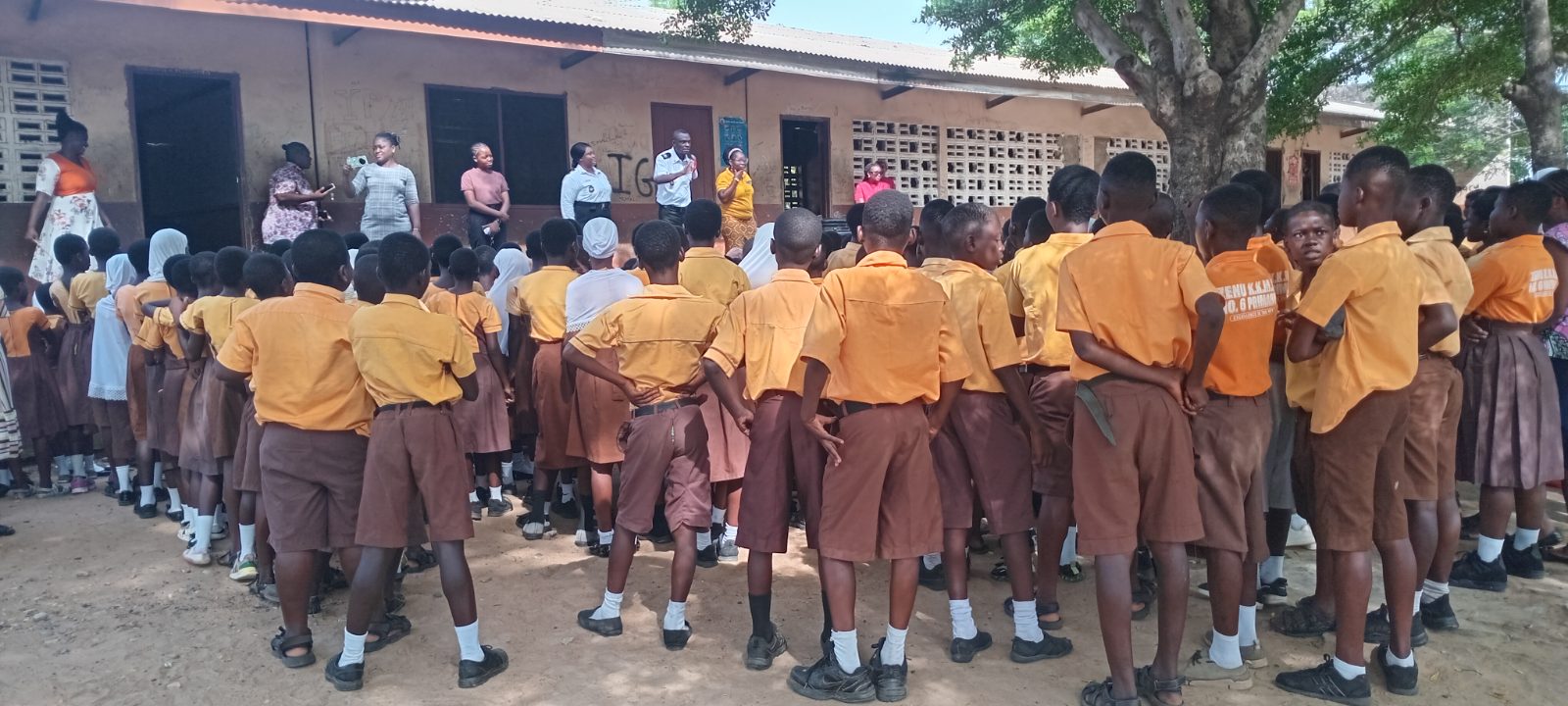
Learners of the Zenu Cluster of Schools have been equipped with practical knowledge on responsible online behaviour, fire safety, and disaster preparedness as part of activities marking the 2026 Citizenship Week Celebration.
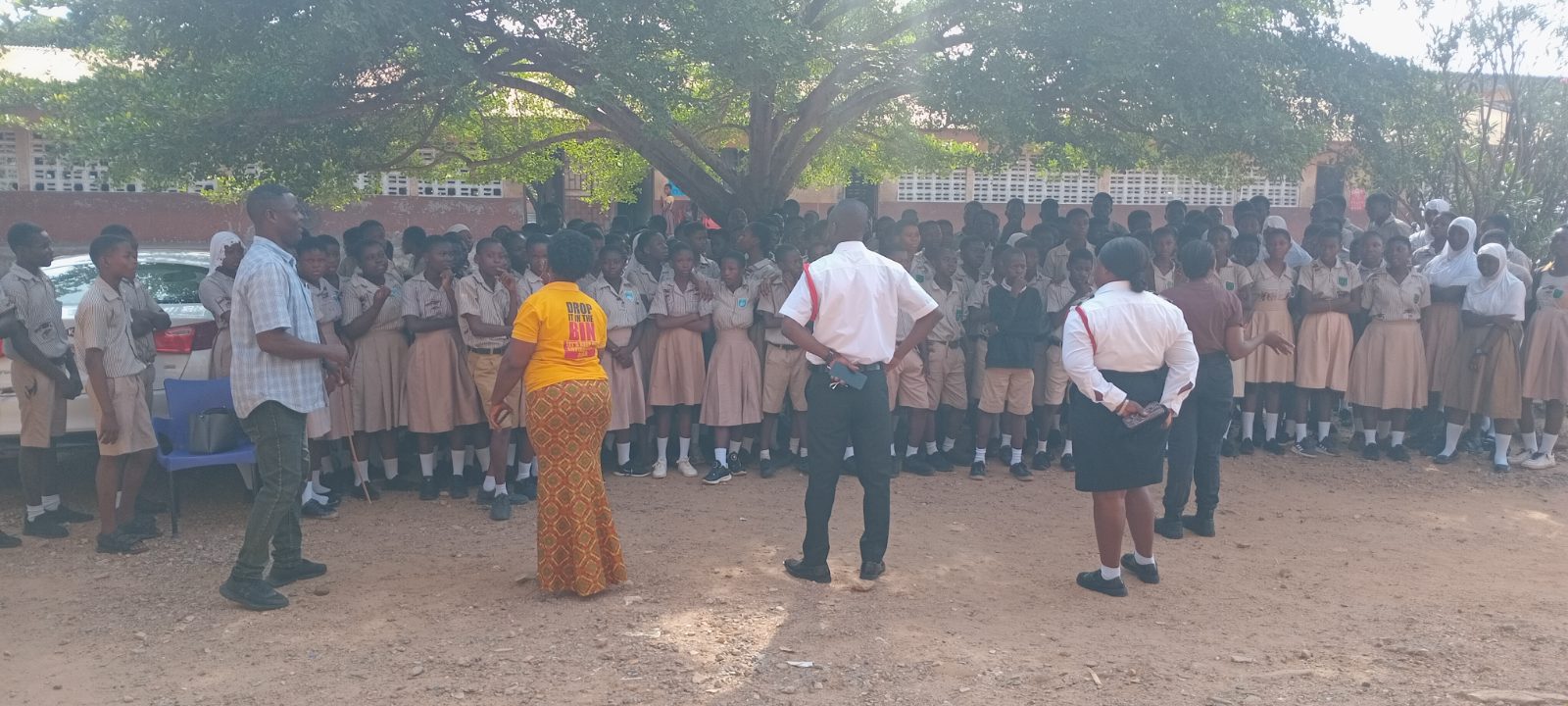
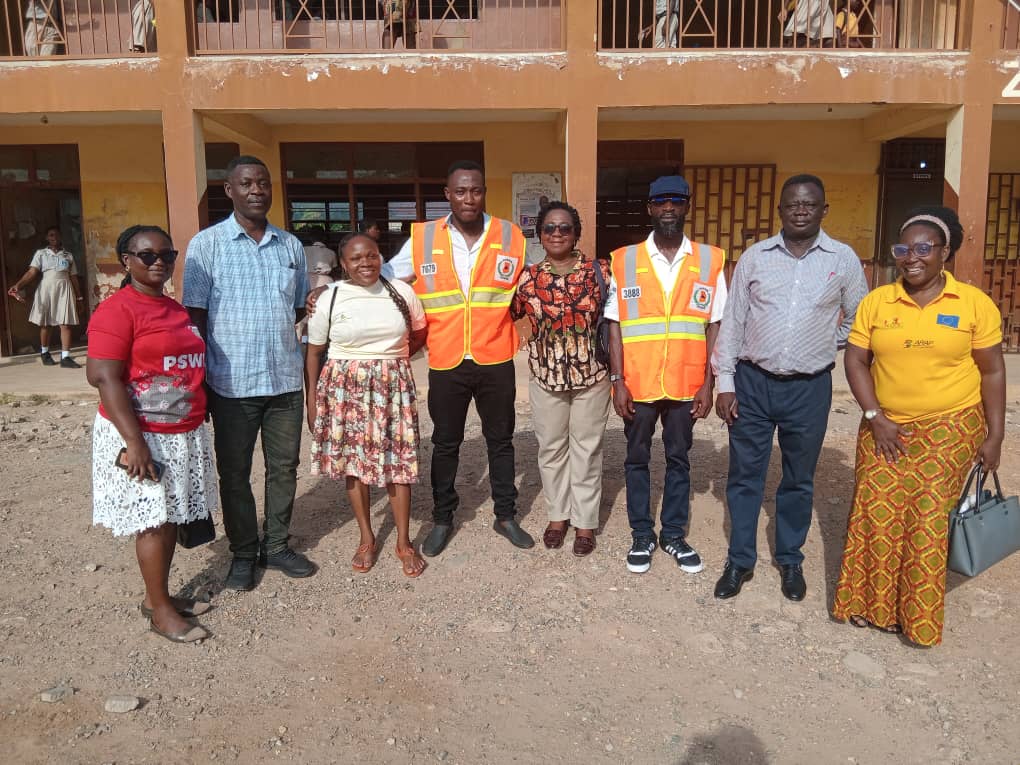
The educational programme brought together officials from the National Commission for Civic Education (NCCE) Zenu Zonal Council, the National Disaster Management Organization (NADMO), and the Ghana National Fire Service (GNFS), Katamanso Fire Station, to engage learners under the theme, “Growing Up Digital: The Ghanaian Child Upholding the Constitution Online.”
During the engagement, learners were educated on the rights and responsibilities of children as enshrined in the 1992 Constitution of Ghana. Facilitators emphasized discipline, honesty, respect, patriotism, and responsible conduct, stressing that citizenship must be reflected both in school and online.
Participants were encouraged to use digital platforms responsibly and to be mindful of the content they create, share, and consume. They were cautioned against cyberbullying, misinformation, online harassment, and other harmful behaviours that undermine the rights and dignity of others.
Building on the discussion of responsible citizenship, officials from NADMO educated learners on common disasters such as floods, storms, and domestic accidents. They explained the causes and effects of these disasters and outlined practical measures to reduce their occurrence and impact.
Learners were advised against dumping refuse into drains, especially during the rainy season, as blocked drainage systems contribute significantly to flooding. They were also encouraged to report dangerous situations to responsible adults and follow safety instructions during emergencies.
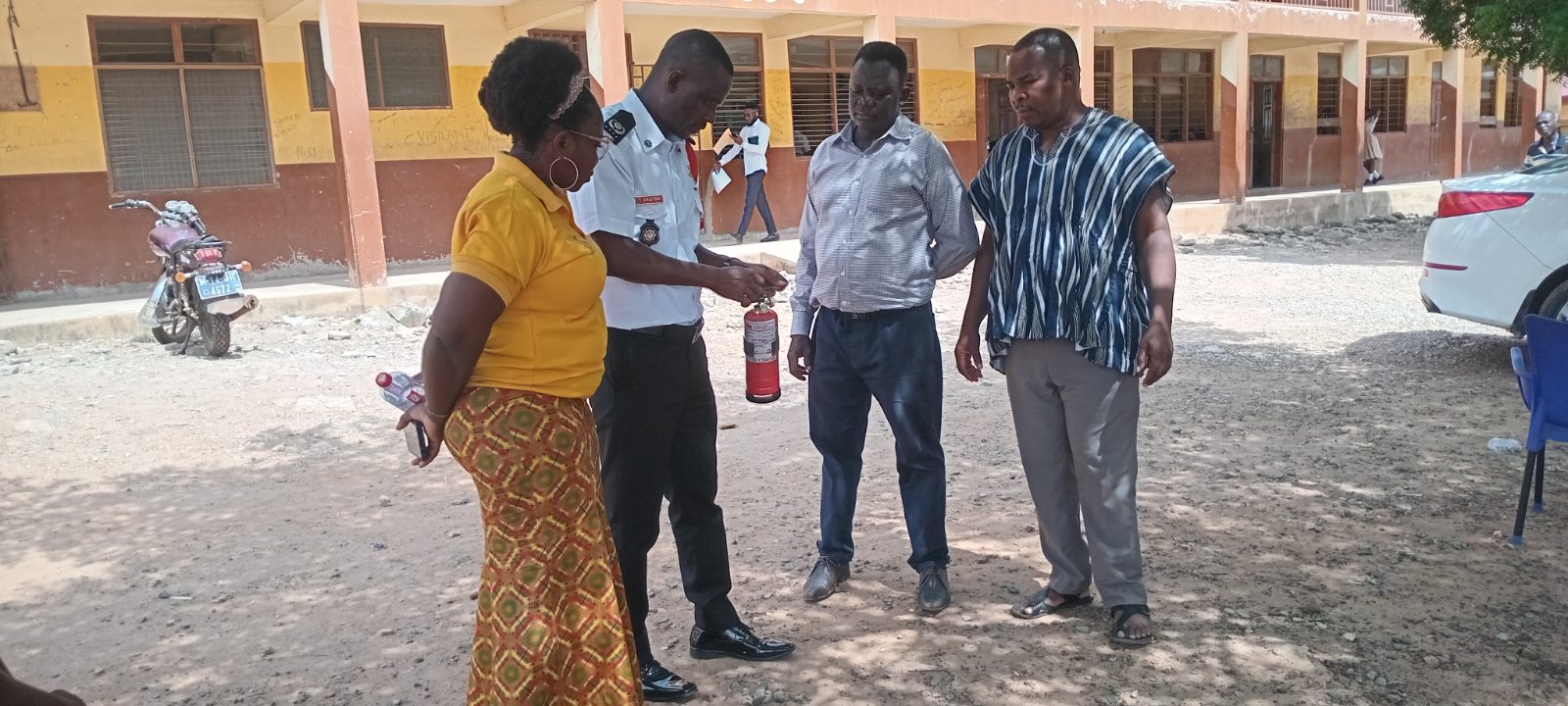
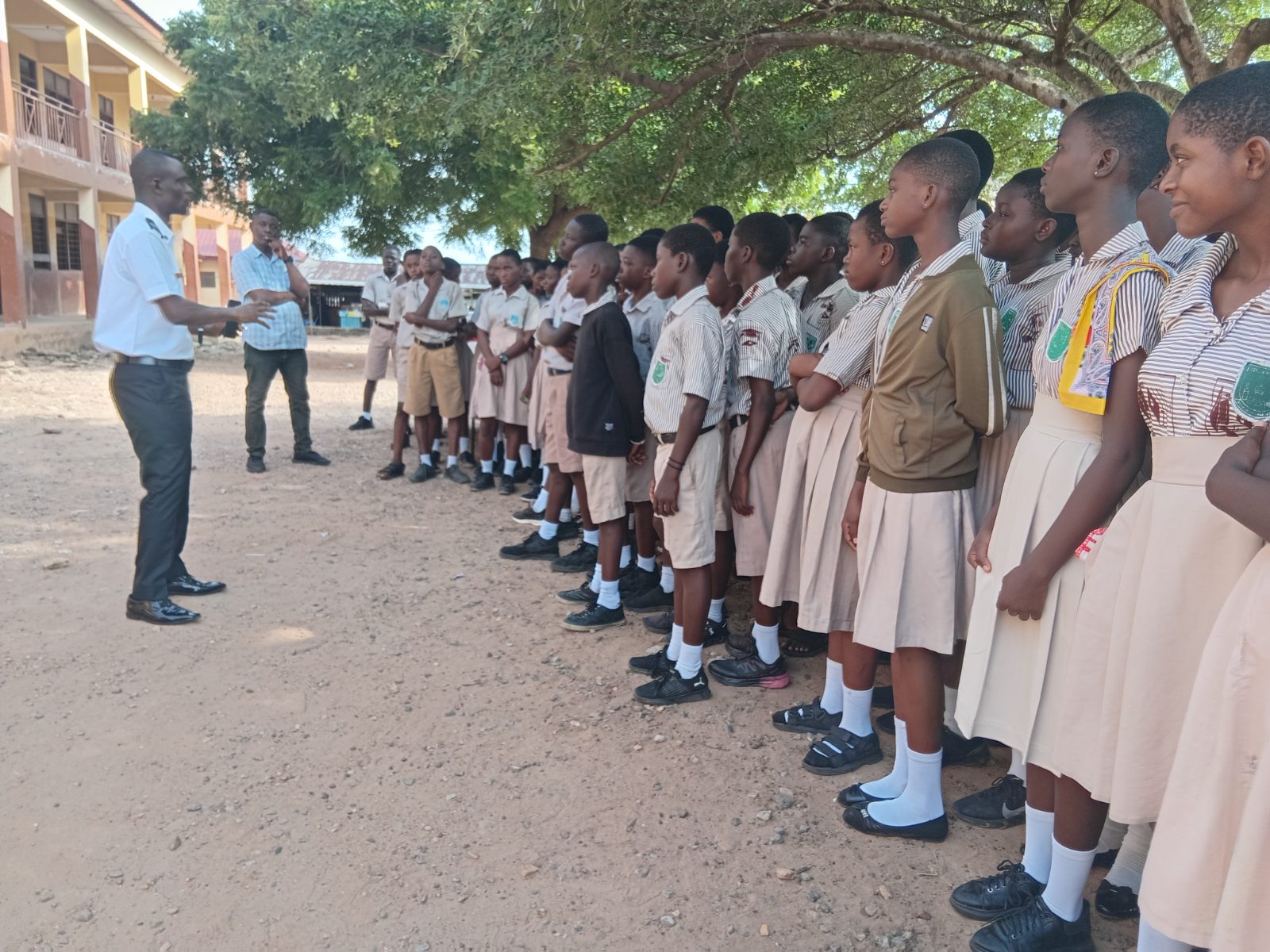
The programme further transitioned into a practical fire safety session led by DO II Francis Akutsa, Second-in-Command of the Ghana National Fire Service, Katamanso Fire Station. He educated learners on common causes of fire outbreaks in homes, schools, and communities, and outlined measures to prevent them.
DO II Akutsa cautioned learners against playing with matches, lighters, gas cylinders, and electrical appliances. He also demonstrated basic fire emergency procedures, including how to raise an alarm, seek assistance, contact emergency responders, and evacuate safely during a fire outbreak.
An interactive question-and-answer session allowed learners to share their experiences and seek clarification on online safety, disaster management, and fire prevention. As part of the practical component, headteachers and teachers were also taken through the proper use of fire extinguishers.
The programme concluded with a renewed commitment from learners, teachers, and facilitators to promote responsible digital citizenship, uphold constitutional values, and prioritize safety in their daily activities. The engagement reinforced the importance of raising informed, responsible, and safety-conscious citizens who can contribute positively to national development both online and offline.
_
Follow us on our social media pages for more stories and posts from the NCCE.

https://www.instagram.com/nccegh/

https://www.facebook.com/nccegh/
Leave a comment