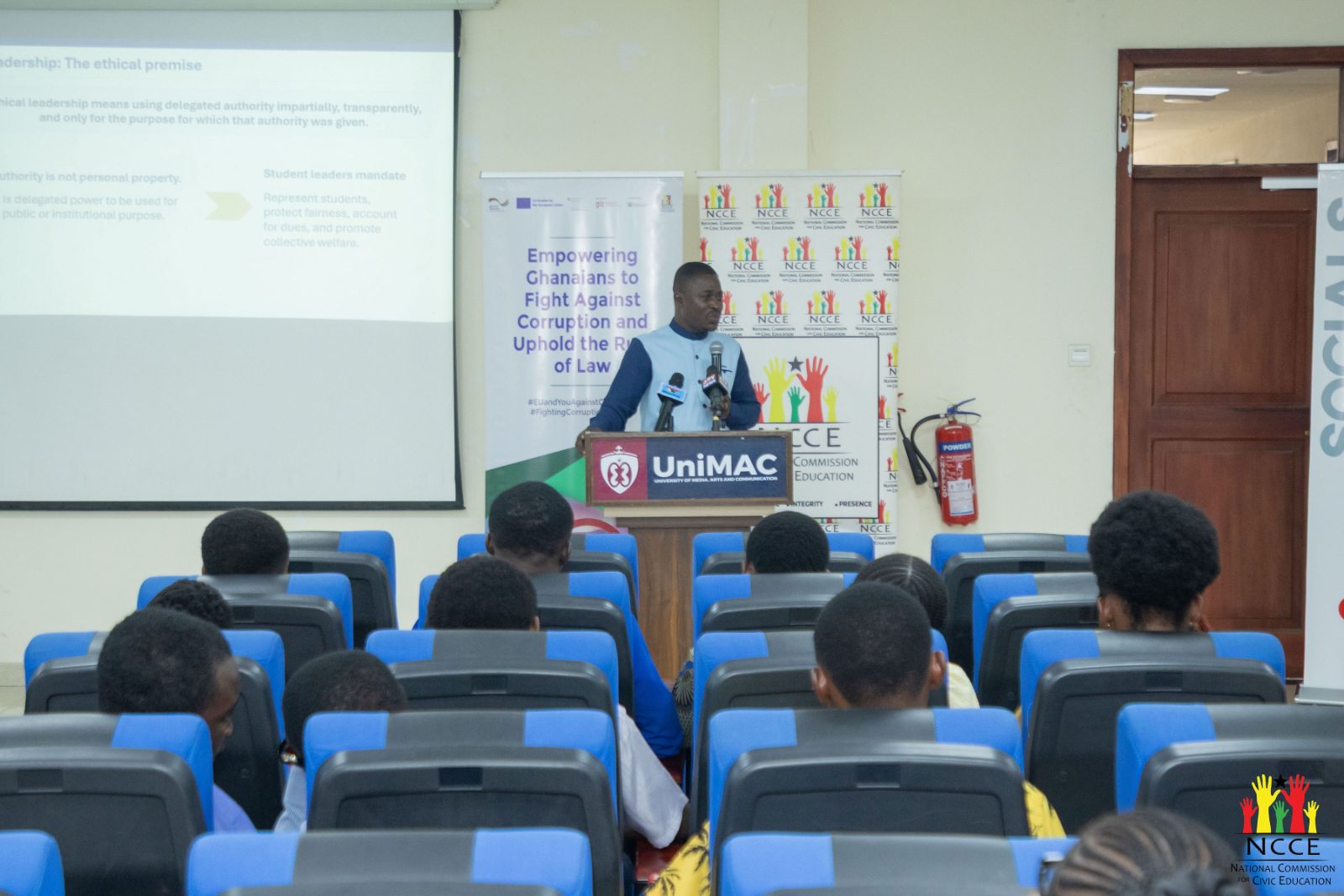
Students participating in the National Commission for Civic Education (NCCE) Inter-Tertiary Civic Education Clubs Symposium at the University of Media, Arts and Communication (UniMAC), Dzorwulu, have been urged to reject unethical influence and uphold integrity in leadership and governance.
The call was made by Dr. Daniel Appiah of the Department of Public Administration at the University of Ghana Business School during his presentation at the symposium held on Tuesday, May 26, 2026.
Speaking on the theme “Civic Engagements on the Rule of Law and the Fight Against Corruption,” Dr. Appiah explained that influence in itself is not negative and can be used constructively to achieve developmental goals. He cited the establishment of Civic Education Clubs on campuses through engagements with institutions such as the NCCE as an example of positive influence.
However, he cautioned students against influence peddling that promotes favoritism, personal gain, and corrupt practices that undermine fairness, accountability, and good governance.
Dr. Appiah stressed the importance of educating young people to resist unethical behavior and become responsible leaders committed to national development. Quoting renowned educationist Professor Stephen Adei, he reminded participants that “leadership is the cause, everything else is the effect,” emphasizing the critical role leadership plays in shaping every nation's future.
Drawing comparisons with countries such as South Korea, China, and India, he noted that although Ghana had strong economic prospects after independence, poor leadership and weak systems have contributed to the country’s developmental challenges.
He therefore challenged students and members of Civic Education Clubs to see themselves as agents of transformational change capable of influencing society positively through discipline, accountability, and integrity.
According to Dr. Appiah, achieving the vision of a “Ghana Beyond Aid” requires citizens, especially the youth, to reflect on their own attitudes and actions before criticizing others. He encouraged student leaders to demonstrate commitment, honesty, and responsibility in their various leadership positions.
He further noted that through active civic engagement and responsible leadership, young people can inspire positive change within their campuses and communities while contributing meaningfully to national development and the fight against corruption.



_
Follow us on our social media pages for more stories and posts from the NCCE.

https://www.instagram.com/nccegh/

https://www.facebook.com/nccegh/
Leave a comment